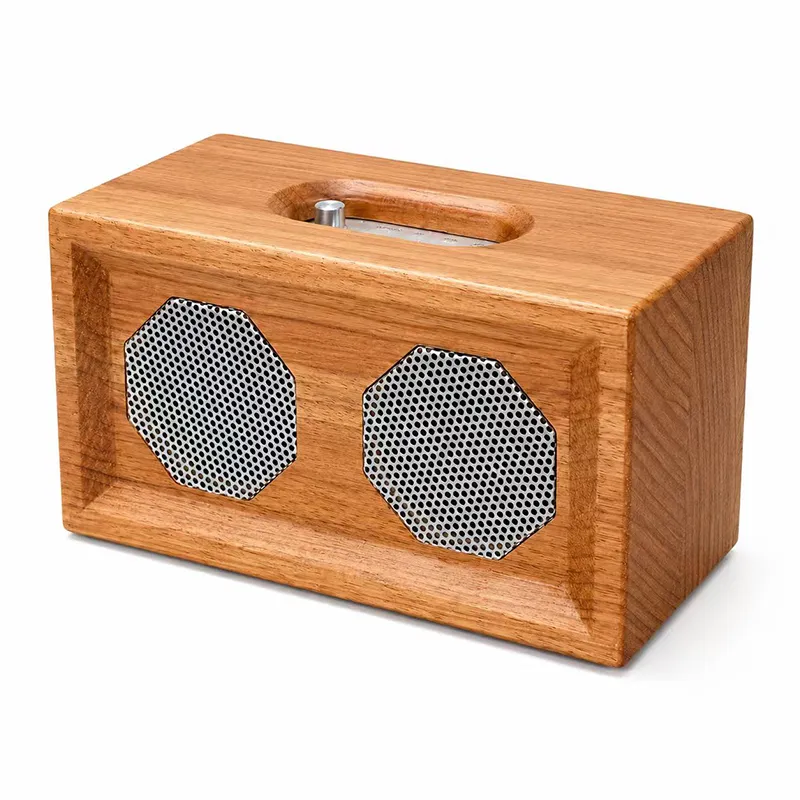
MDF vs Plywood for Speaker Cabinets: Which Is Better?
When people talk about speaker sound, they usually talk about drivers, amplifiers, crossover parts, or DSP. The cabinet gets less attention. But the cabinet is not only a box that holds the parts. It has to stay stable while the driver is moving, control vibration, keep the correct internal volume, and survive years of use.
For wooden speaker cabinets, two materials appear again and again: MDF and plywood. Both can make a very good speaker enclosure. Both also have weak points.
So, MDF vs plywood for speaker cabinets: which one is better?
There is no simple winner. MDF is often a practical choice for home audio because it is dense, uniform, easy to machine, and has useful damping. Quality plywood is usually stronger for its weight and handles transport better. The better choice depends on the speaker size, cabinet structure, finish, working environment, and cost target.
What Is MDF?
MDF means medium-density fiberboard. It is an engineered wood panel made from fine wood fibers combined with resin and pressed into a flat board.
One useful thing about MDF is its uniform structure. There is no natural grain direction like solid timber. The panel is fairly consistent from one area to another. This is helpful when cutting driver holes, routing a port, making grooves, or producing the same cabinet many times.
MDF is also quite dense. Its internal structure gives it useful damping, which is one reason MDF speaker cabinets are common in home hi-fi, bookshelf speakers, studio products, and subwoofer enclosures.
Still, MDF is not perfect. It is heavy. The edges can be easier to damage than good plywood, and moisture is not its friend. The design also needs proper joints and bracing. A thick MDF panel can still vibrate if a large unsupported area is left inside the cabinet.
What Is Plywood?
Plywood is made in a different way. Thin layers of wood veneer are bonded together, usually with the grain direction changing between layers.
This cross-layer structure gives good structural strength. Good plywood can be stiff without becoming as heavy as a similar MDF panel, which helps when a speaker is moved or transported often.
But ‘plywood’ is a broad word. Cheap construction plywood and high-quality birch plywood are not the same material. Low-grade panels may have internal gaps, uneven layers, or other defects. For a serious plywood speaker cabinet, panel quality matters a lot.
Baltic birch plywood is often discussed in speaker building because of its consistent layers and good strength-to-weight ratio. It can be a good fit for professional audio cabinets, portable systems, and products where mechanical strength is important.
.webp "mdf-vs-plywood-for-speaker-cabinets (6).jpg")
MDF uses compressed wood fibers; plywood uses cross-laminated veneer layers.
MDF vs Plywood Speaker Cabinet: Quick Comparison
Feature | MDF | Plywood |
Density | High | Moderate |
Internal damping | Good | Lower |
Rigidity / weight | Moderate | High |
Weight | Heavier | Lighter |
Screw holding | Fair | Good |
Moisture resistance | Low | Better |
Machining | Very good | Good |
Typical cost | Lower | Higher for good quality |
Looking at this list, it is easy to think one material should be better. In practice, speaker cabinet material is only one part of the enclosure design.
Which Material Controls Resonance Better?
This is where the MDF vs plywood discussion can become confusing.
Every cabinet panel can resonate. The real job is to keep those resonances controlled so they do not add obvious coloration.
MDF has relatively good internal damping and a homogeneous structure. This can make its behavior predictable. Plywood is generally stiffer for its weight, but its damping is different. A good plywood enclosure may therefore use smart bracing and damping treatment to control panel vibration.
Panel size is also important. A large side wall can flex more easily than a small panel. This is why internal bracing often matters as much as choosing the speaker cabinet material itself.
So, when comparing two speakers, looking only at ‘MDF’ or ‘plywood’ on the specification sheet does not tell you everything. Cabinet dimensions, panel thickness, joints, internal bracing and damping all matter.
.webp "mdf-vs-plywood-for-speaker-cabinets (3).jpg")
Material structure changes how stiffness, damping and panel behavior are managed.
Rigidity and Weight
MDF is heavy. For a small bookshelf speaker, this may not be a big problem. In fact, the extra mass can make the product feel solid and stable.
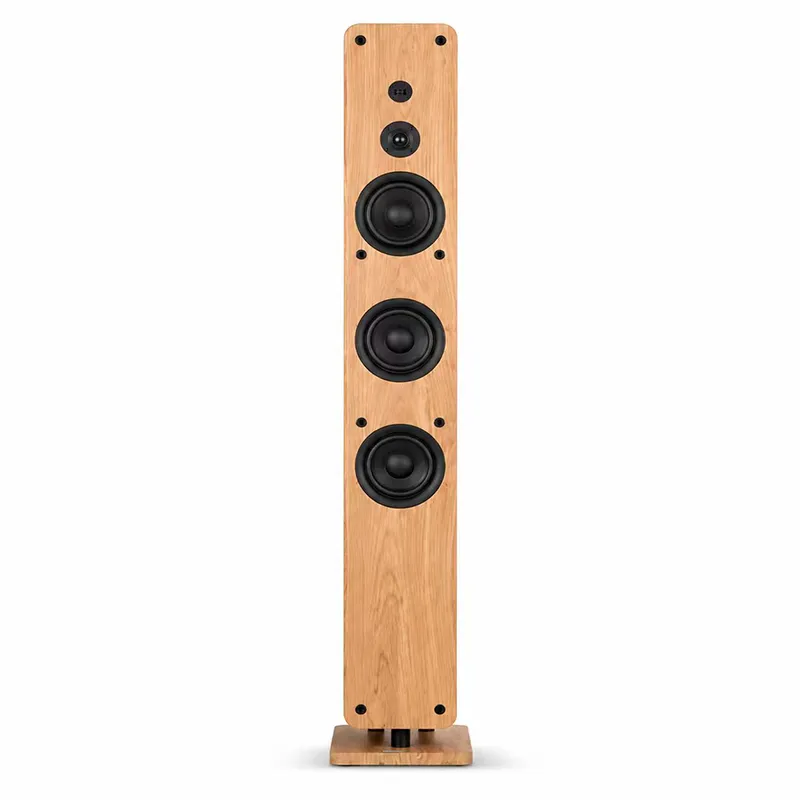
On a large floor-standing speaker, subwoofer, PA cabinet, or portable system, the weight starts to matter more.
Plywood has an advantage here. Quality birch plywood gives good stiffness without needing the same amount of mass. That is one reason plywood is common in speakers that need to travel or be installed in different places.
For a speaker that sits on the same shelf for five years, a few extra kilograms may not matter much. For a speaker that gets loaded into a truck every weekend, it becomes a different question.
This is why there is no universal best material for speaker cabinets. The use of the speaker matters.
Machining and Production
For speaker manufacturing, acoustic performance is only part of the decision. The material also has to work well in production.
MDF machines cleanly and consistently. CNC equipment can cut driver openings, ports, terminal holes, rebates, and cabinet joints with good repeatability. Its flat surface is also convenient for sanding, painting, laminate, and wood veneer.
Plywood also machines well when the panel quality is good. It can produce strong joints and hold screws well. But exposed plywood edges may need more finishing work if the product is designed to look like furniture rather than professional audio equipment.
At XianSpeaker, cabinet production is not treated as one material decision. Material selection is followed by CNC machining, assembly, finishing, component integration, acoustic testing, and quality control. This matters because the best panel material cannot compensate for inaccurate joints or a poorly tuned enclosure.
For an OEM speaker project, this point is important. A material that performs well in a prototype also has to be practical when the same cabinet is made again and again.
Moisture and Durability
MDF should normally stay in a controlled indoor environment. If unsealed MDF takes in water or a lot of moisture, it may swell, especially around exposed edges.
Plywood usually handles rough conditions better, although the exact result depends on the wood species, adhesive, panel grade, surface coating, and edge protection.
For a living-room speaker, moisture resistance may not be a major design problem. For a touring cabinet, outdoor installation, or product that may experience frequent transport, plywood can be the safer structural choice.
This does not mean plywood is waterproof. A speaker enclosure still needs suitable finishing and protection for its intended environment.
Surface Finish and Appearance
MDF has a smooth face, so it is popular when the cabinet will be painted, wrapped, laminated, or covered with natural wood veneer. It can create a clean surface without visible wood grain underneath.
The important point is that ‘wooden speaker’ does not always mean solid wood.
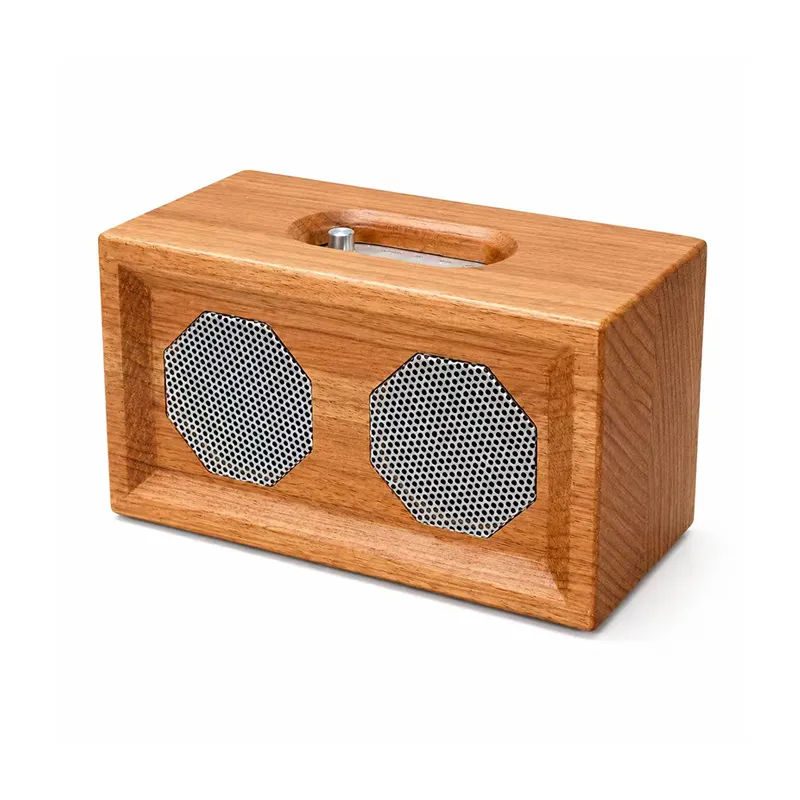
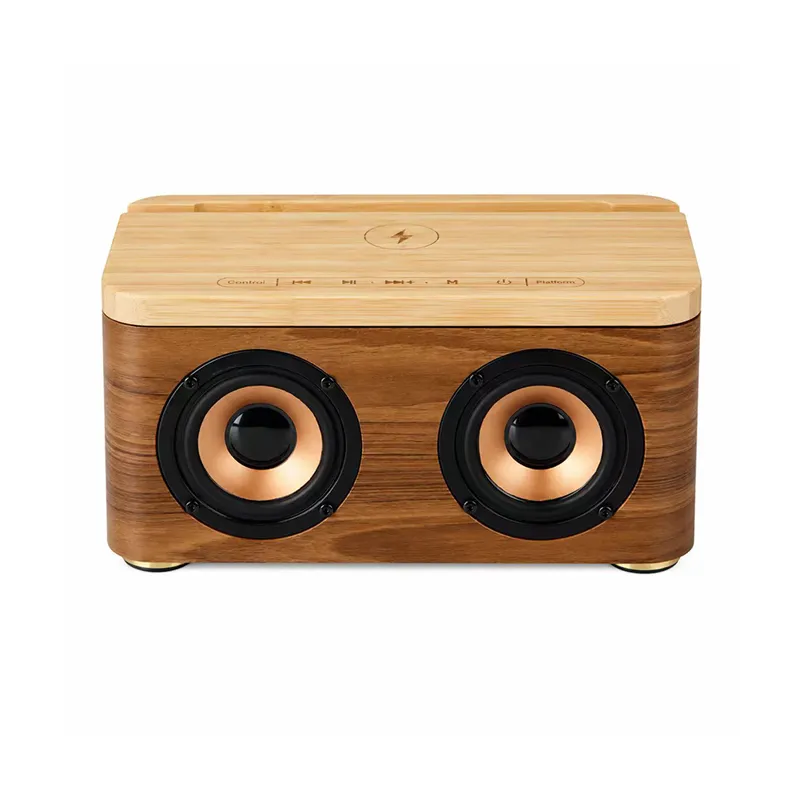
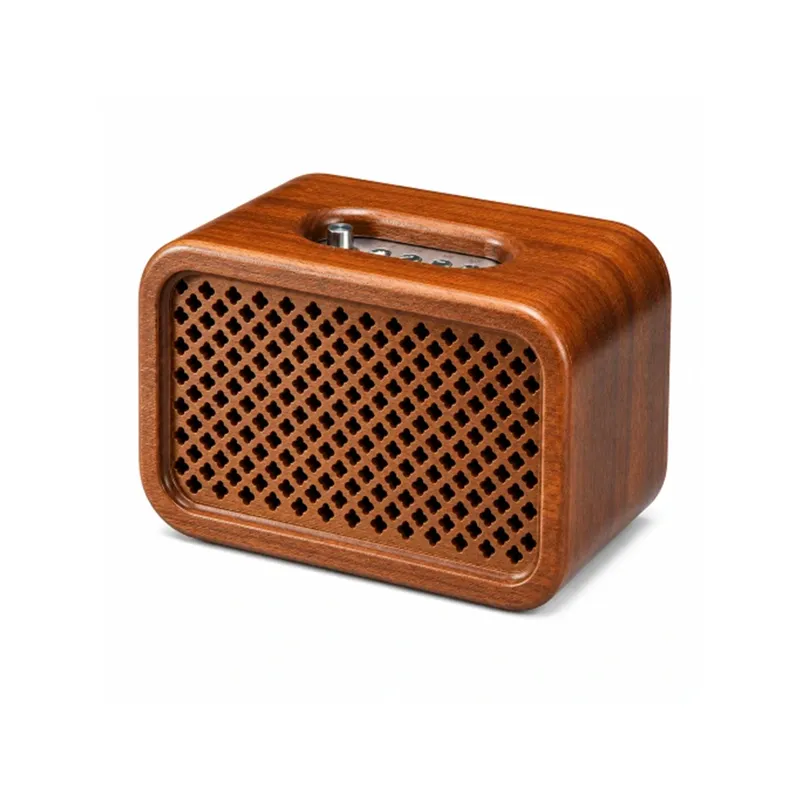
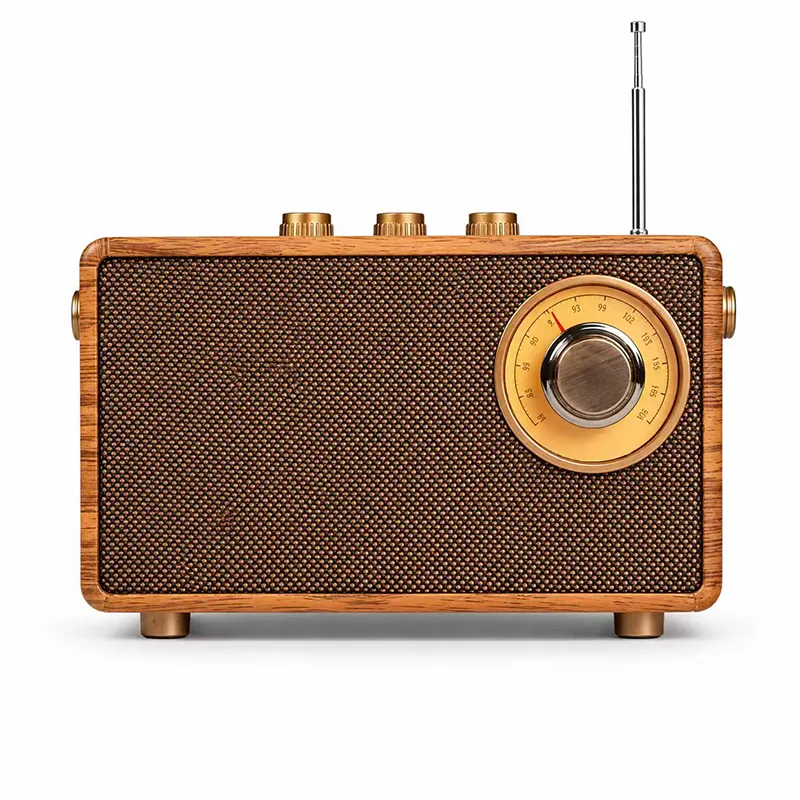
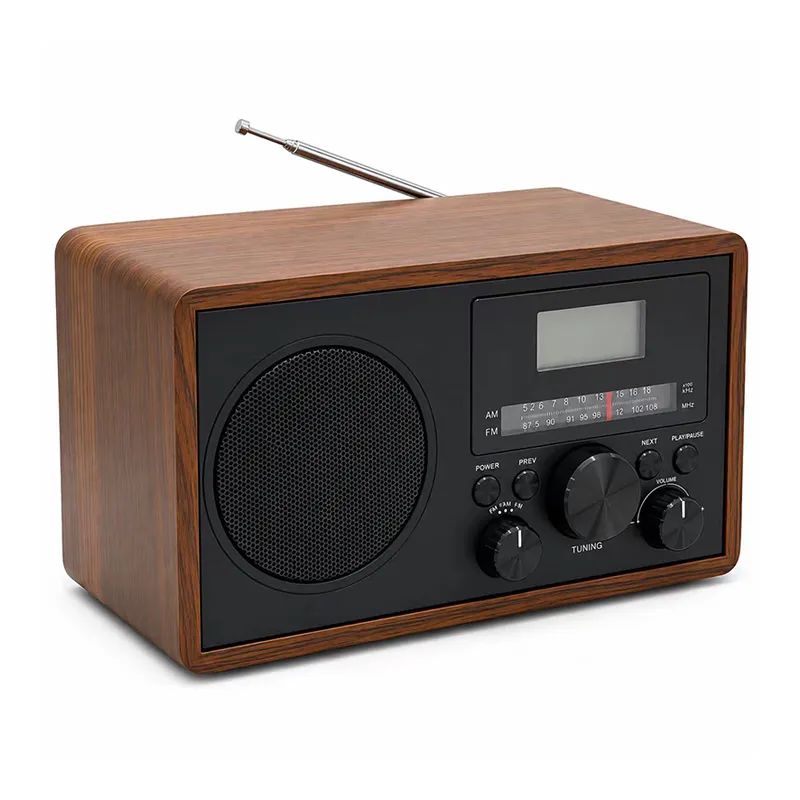
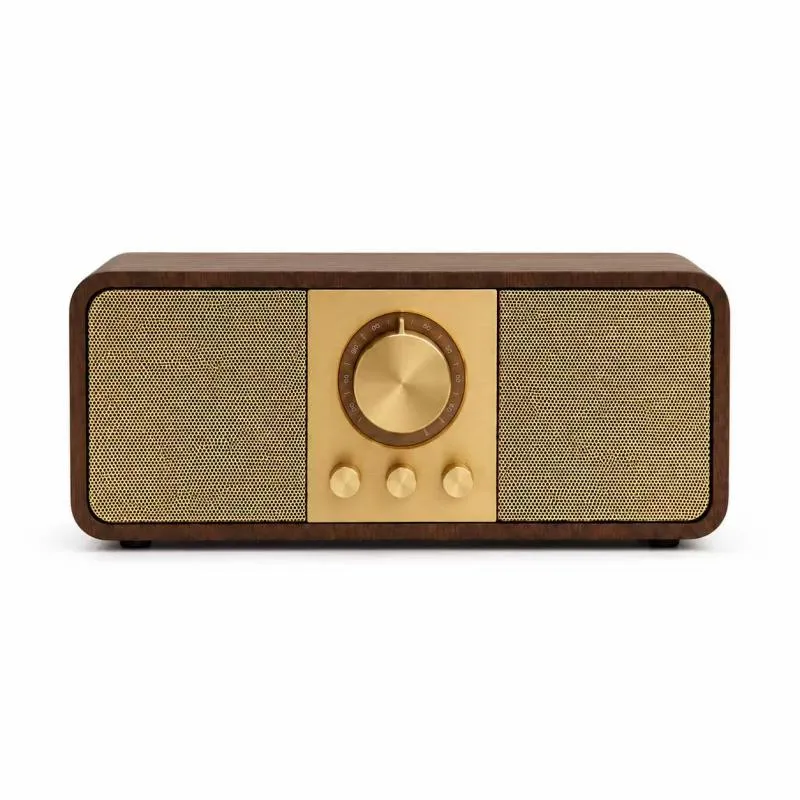
A premium-looking cabinet may use MDF or plywood as the structural core, with natural veneer, laminate, paint, or another finish on the outside.
For many home-audio products, this gives designers more freedom. The acoustic structure can be selected for engineering reasons, while the outside finish can be selected for appearance.
Which Is Better for Home Hi-Fi Speakers?
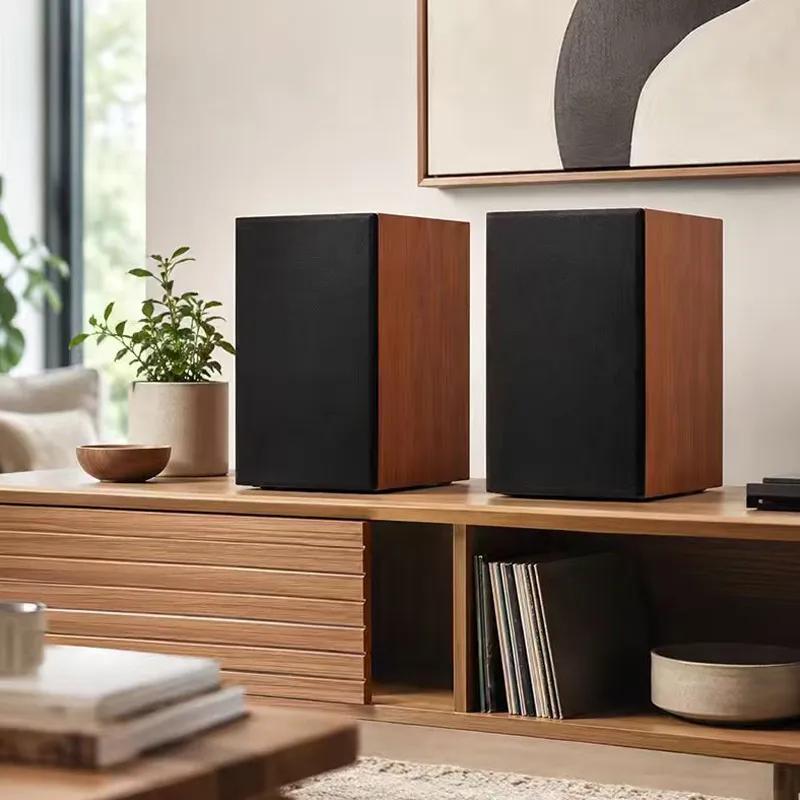
For many indoor hi-fi speakers, MDF is a sensible choice.
The cabinet usually stays in one room, so weight and transport damage are less important. MDF gives predictable machining, a smooth finish, useful damping, and reasonable production cost.
With the right thickness, bracing, joints, and internal damping, it can make an excellent enclosure.
Plywood can also be used in hi-fi, especially when lower weight, visible wood layers, stronger screw holding, or a specific cabinet construction is part of the design.
There is no rule saying a premium speaker must use plywood, or that an MDF cabinet is automatically a cheaper acoustic solution. Good engineering matters more.
Which Is Better for PA and Portable Speakers?
Plywood often makes more sense for PA speakers and other cabinets that move frequently.
A professional speaker may be lifted into a vehicle, carried onto a stage, stacked, installed, removed, and transported again. Here, strength-to-weight ratio and resistance to impact become important.
Quality plywood can offer a better balance than MDF.
But the coating, corners, handles, joints, and internal structure still need to be designed for this use. Using an expensive Baltic birch plywood speaker cabinet does not fix a poor mechanical design.
.webp "mdf-vs-plywood-for-speaker-cabinets (4).jpg")
Typical use cases: MDF is common in indoor hi-fi; plywood is valuable when lower weight and durability matter.
What About Subwoofer Cabinets?
Subwoofers create strong forces because the woofer moves a lot of air at low frequencies. The enclosure therefore needs good rigidity.
Both MDF and plywood can work for a subwoofer box.
MDF provides mass and damping. Plywood can provide high stiffness with less weight.
Instead of asking only ‘MDF or plywood?’, ask a few more questions. How large is the enclosure? How much output is required? How long are the unsupported panels? Where will bracing be placed? How thick is the front baffle? Will the subwoofer stay in one room or move often?
Those questions usually tell you more than the material name alone.
So, MDF or Plywood: Which Should You Choose?
Choose MDF for a speaker cabinet when:
· the speaker is mainly for indoor use
· a smooth painted or veneered finish is needed
· consistent CNC machining is important
· extra cabinet weight is acceptable
· cost needs to stay controlled
Choose quality plywood when:
· lower weight is important
· the speaker will be transported often
· better screw holding and impact resistance are useful
· the cabinet is for PA, touring, installation, or portable use
· exposed plywood edges are part of the design
The decision should start from the product, not from the material.
A compact home speaker, a large subwoofer and a touring PA cabinet are doing three very different jobs. It would be strange to expect the same speaker box material to be perfect for all three.
Final Thoughts
MDF vs plywood for speaker cabinets is a useful comparison, but it should not become a shortcut for judging sound quality.
MDF offers good damping, consistent machining, a smooth finish, and practical cost. Plywood offers excellent stiffness for its weight, good mechanical strength, and advantages when the cabinet needs to travel.
The final speaker still depends on the full enclosure design: internal volume, panel thickness, bracing, joints, damping, driver mounting, port design, crossover or DSP tuning, and manufacturing accuracy.
If these parts are handled well, both an MDF speaker cabinet and a plywood speaker cabinet can perform very well.
The better material is simply the one that fits the job.
.webp "mdf-vs-plywood-for-speaker-cabinets (2).jpg")
Key takeaway: choose the material as part of the complete enclosure design, not as a stand-alone quality label.
Editorial Notes (Not Part of the Published Article)
Internal linking: link the first natural mention of wooden speaker cabinets to XianSpeaker’s article ‘Why Are Speaker Cabinets Made of Wood? A Practical Guide.’ Link the manufacturing paragraph to the XianSpeaker manufacturing or company capability page, and link a natural product phrase such as wooden speakers to the relevant product category page.
SEO approach: the primary keyword is used naturally in the title, introduction and conclusion. Secondary phrases are distributed by topic rather than repeated mechanically. This follows Google’s people-first guidance: the page should answer the reader’s question with useful, original information instead of being written mainly to manipulate rankings.
Research References
· XianSpeaker – Why Are Speaker Cabinets Made of Wood? A Practical Guide
· XianSpeaker – Official Website
· Google Search Central – Creating Helpful, Reliable, People-First Content
· Google Search Central – Guidance on Generative AI Content
· Elliott Sound Products – Loudspeaker Enclosure Design Guidelines
· Parts Express – Loudspeaker Enclosure Construction Tips
xianspeaker
xianspeaker: high-end wood & bamboo speakers. 5,000㎡ workshop, strict QC, innovative design. Trusted globally.