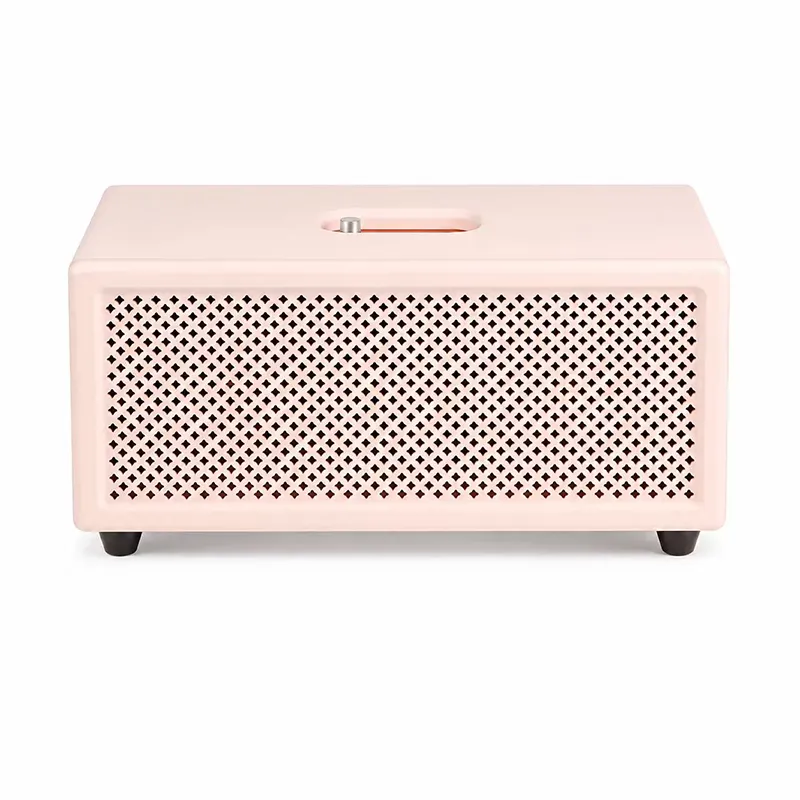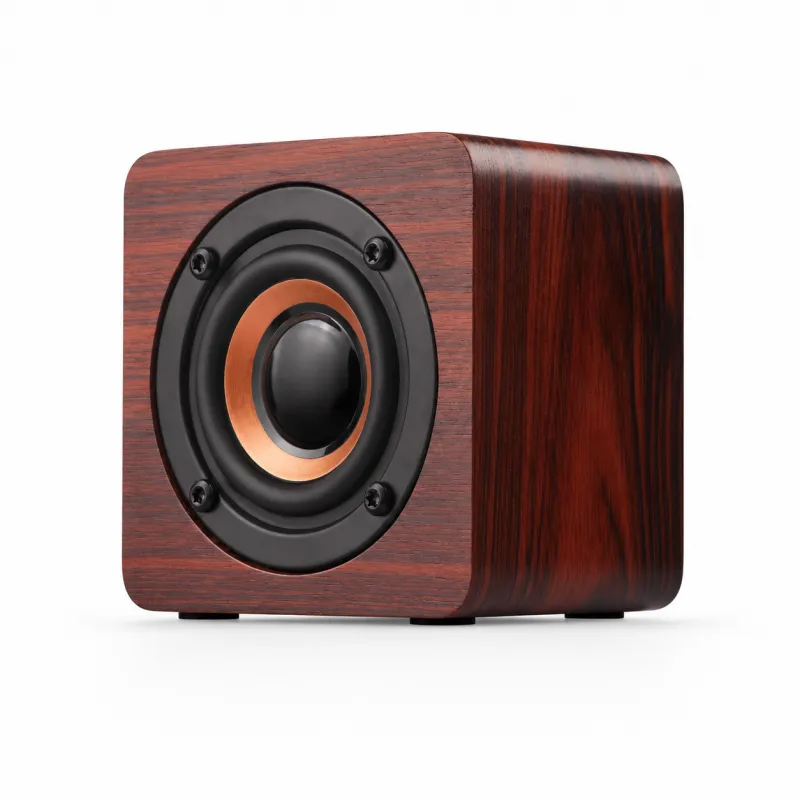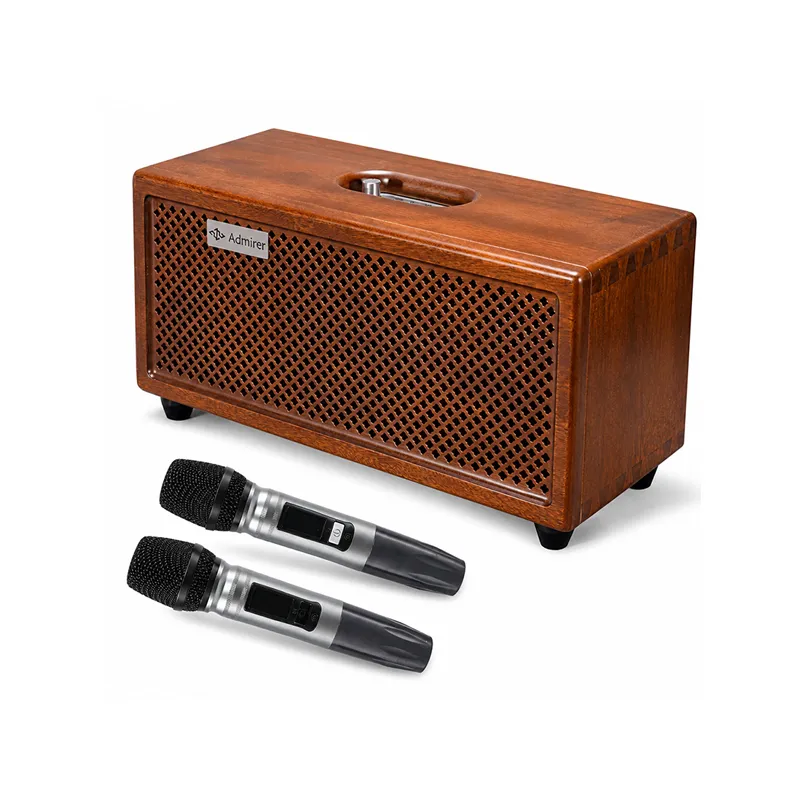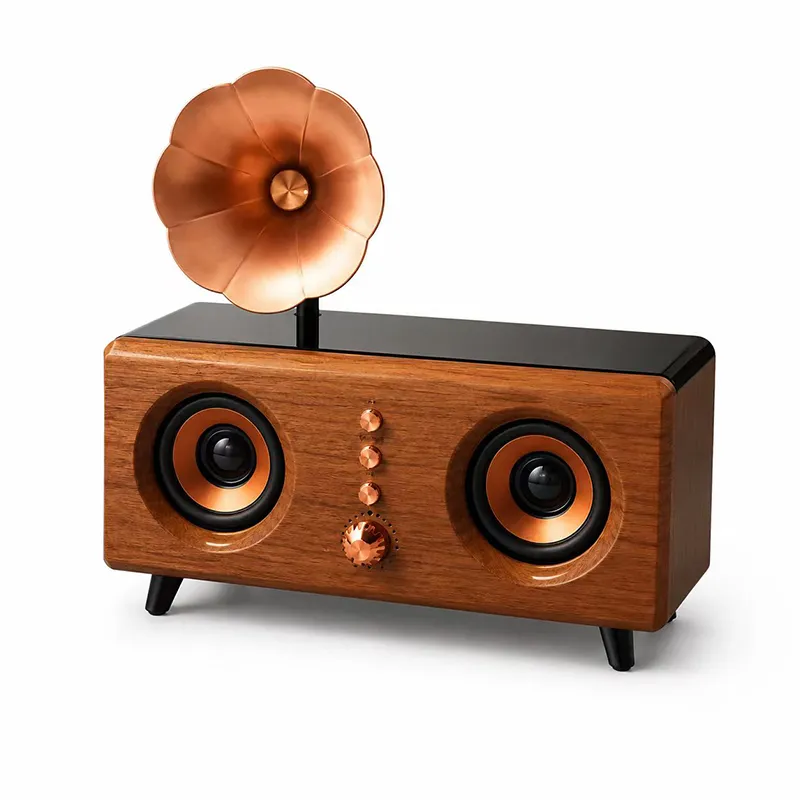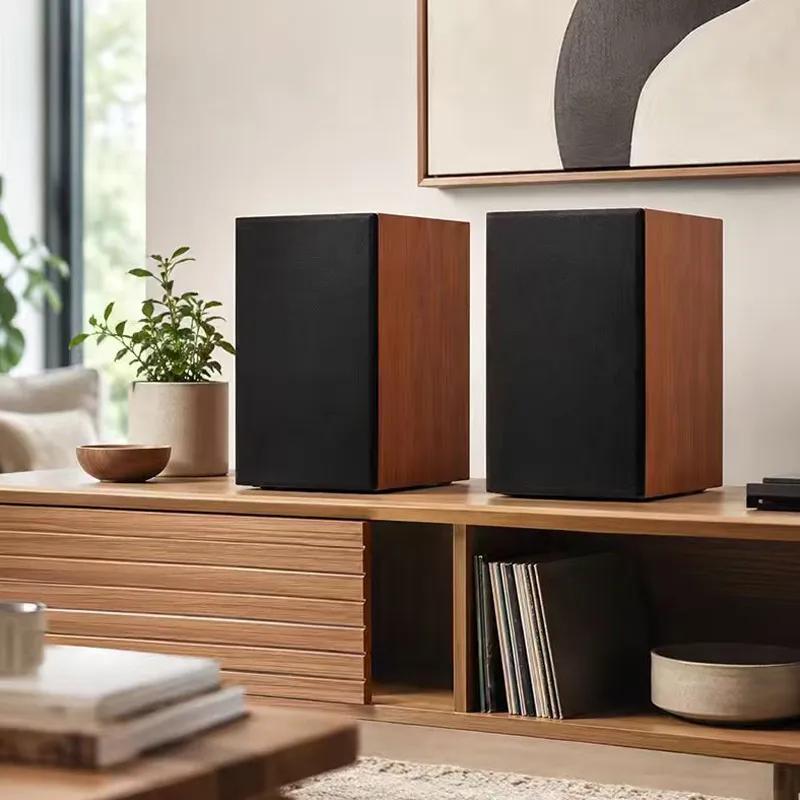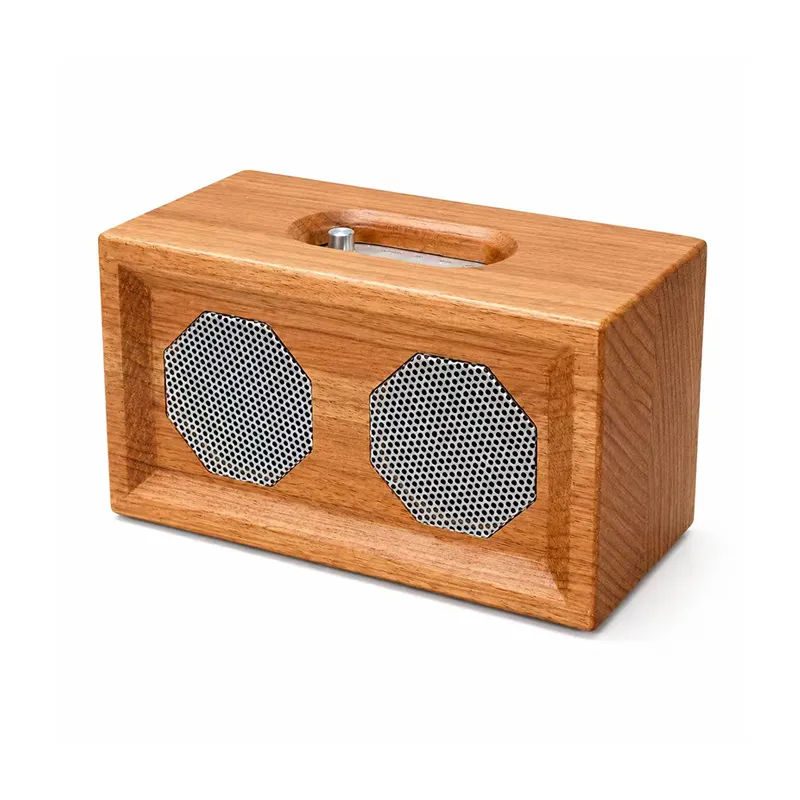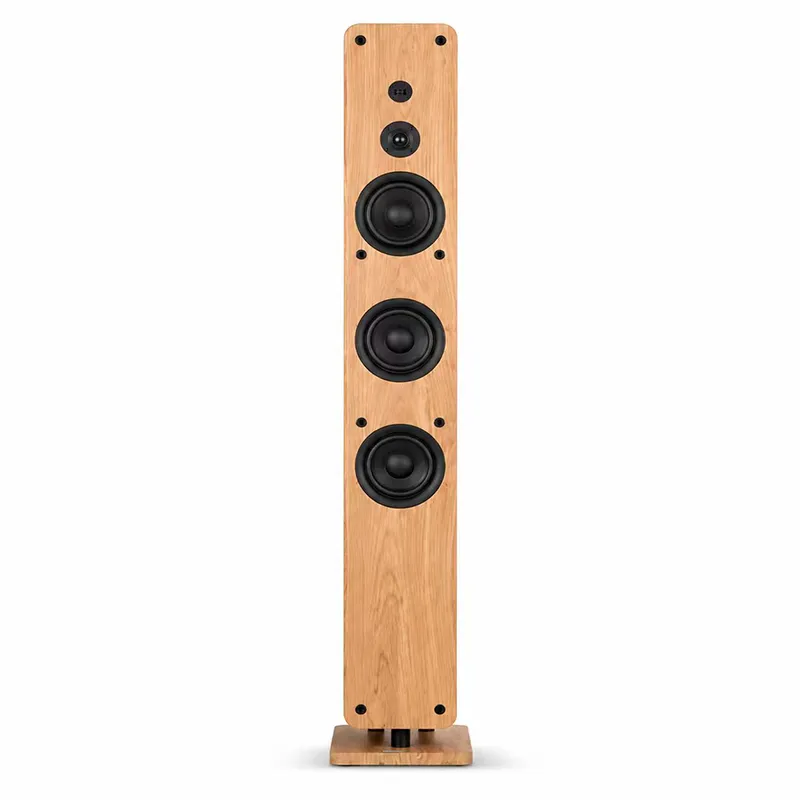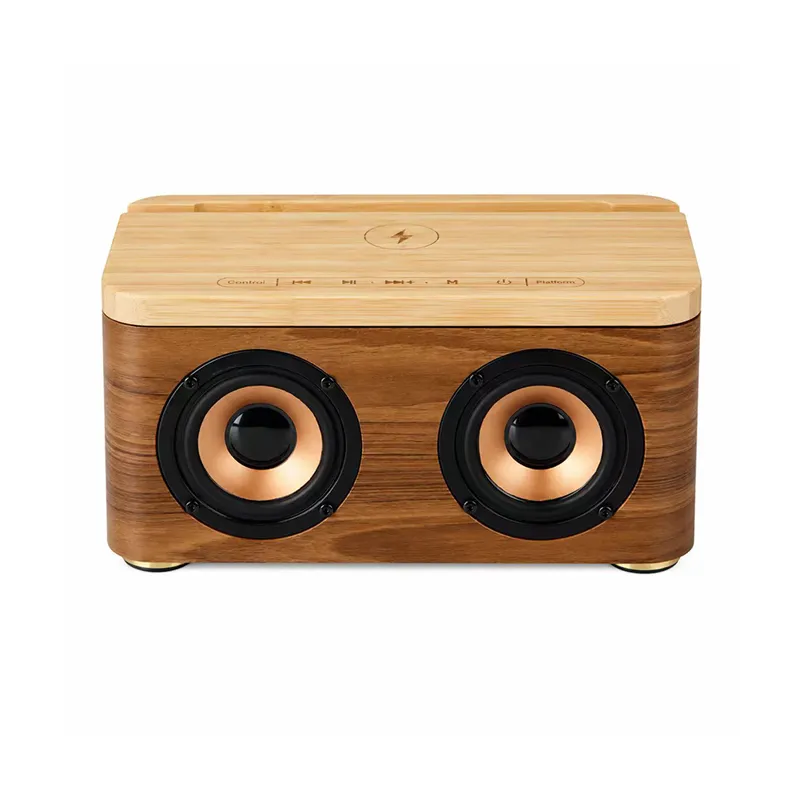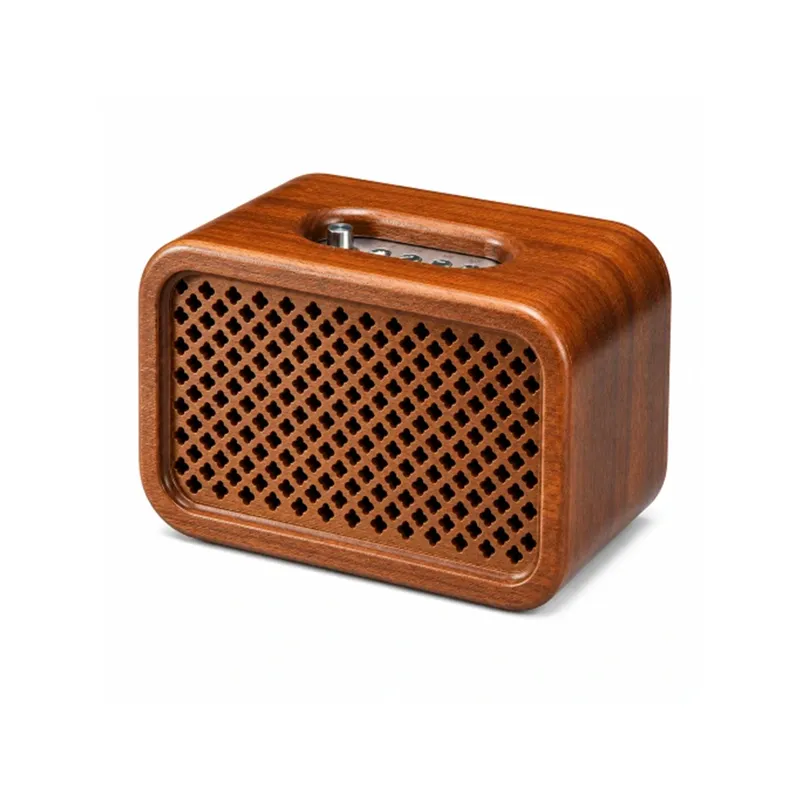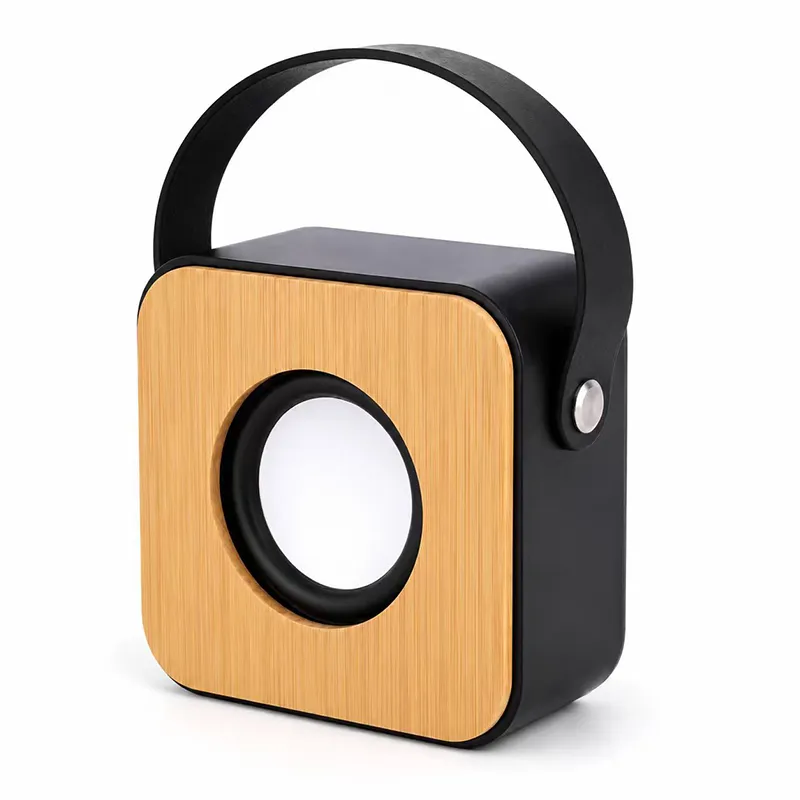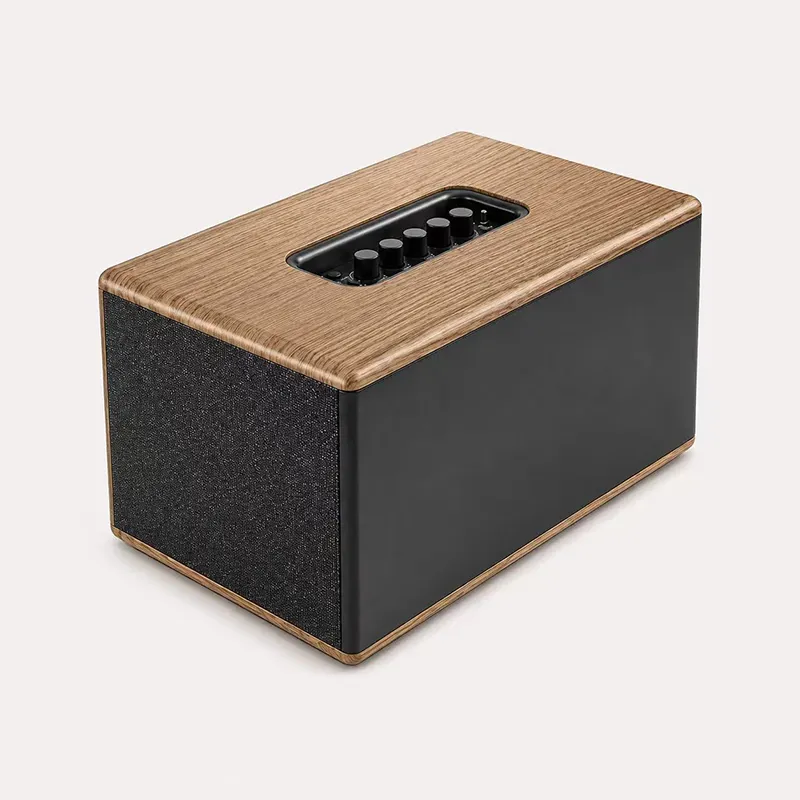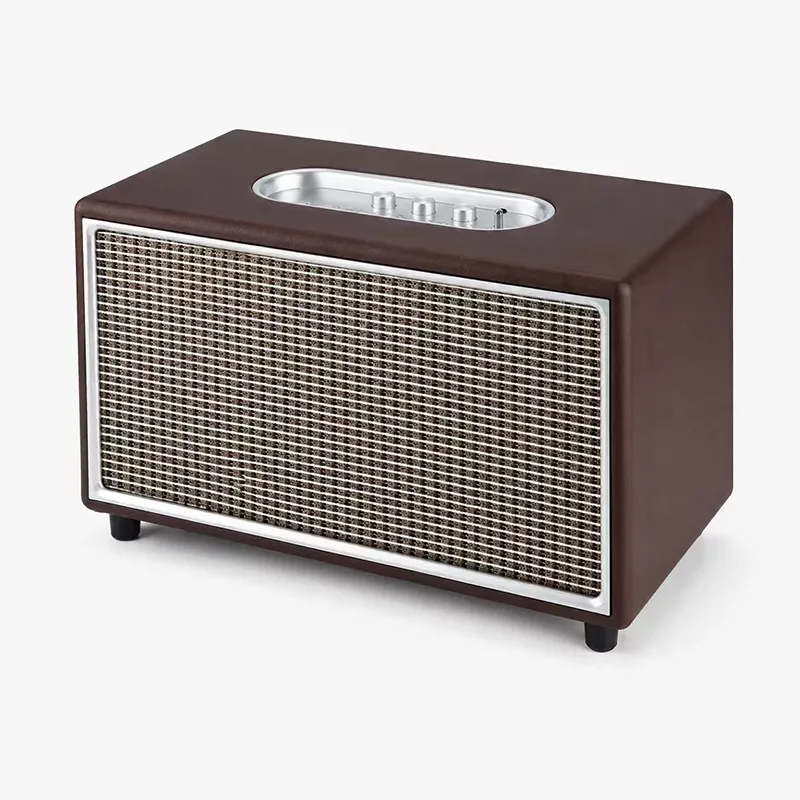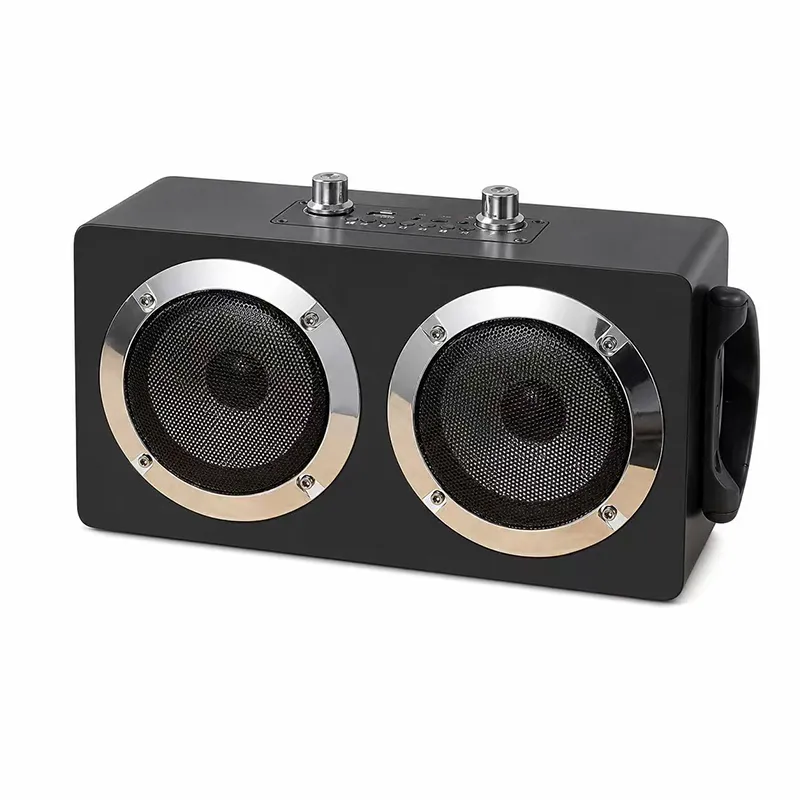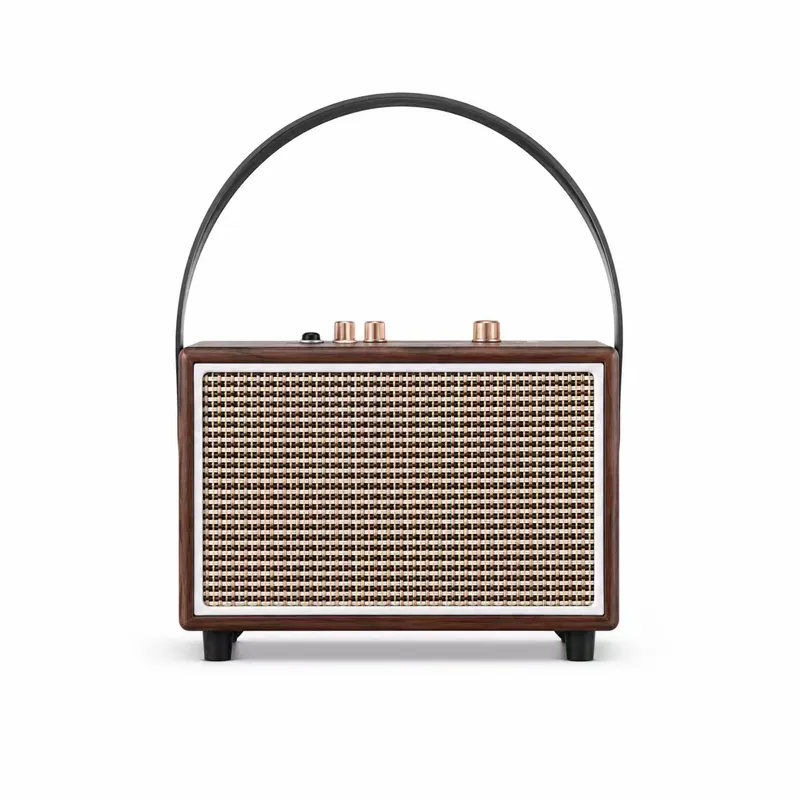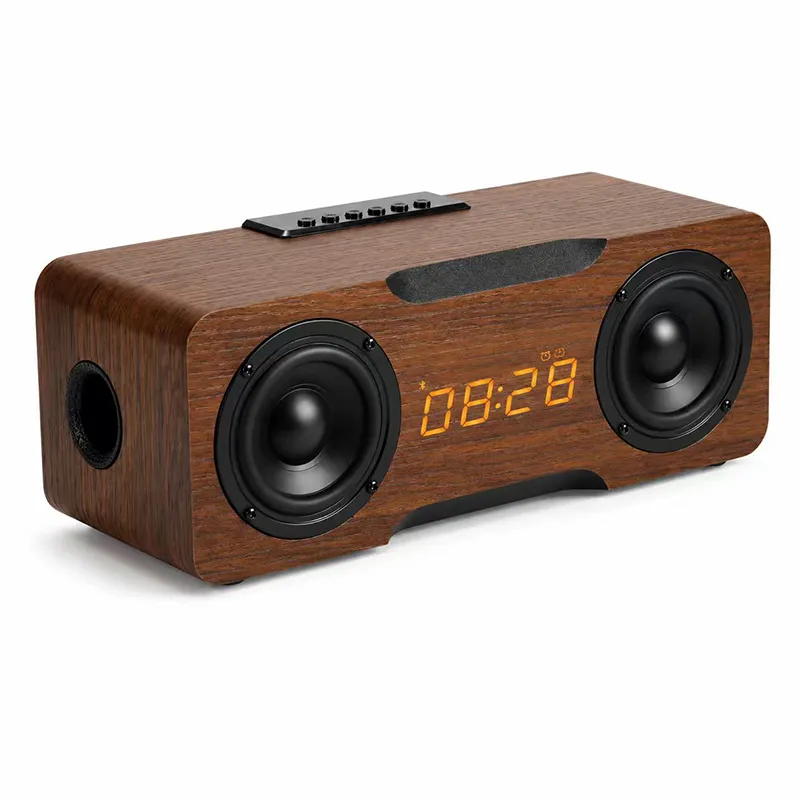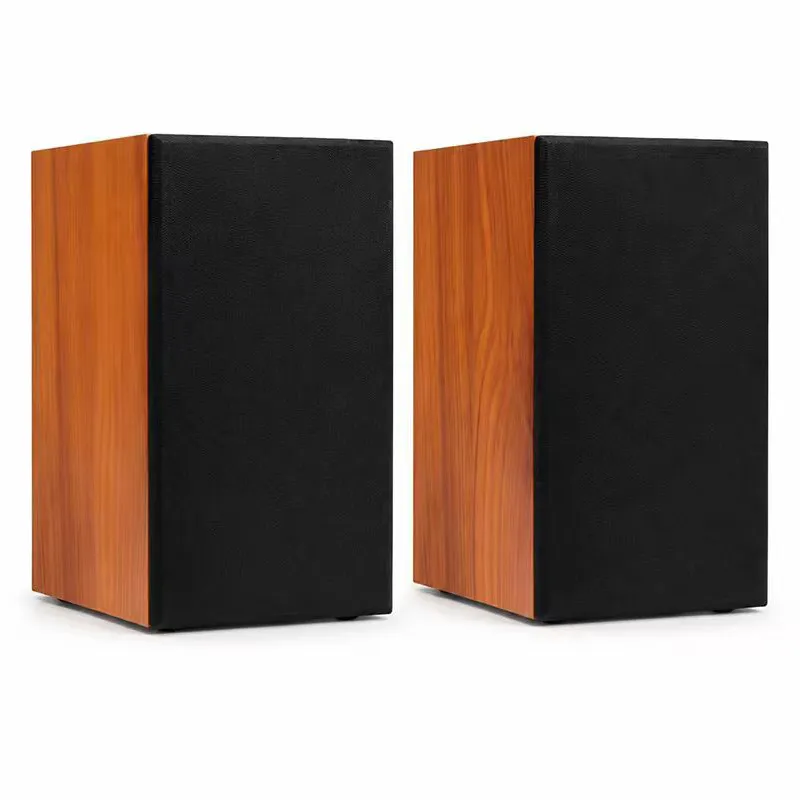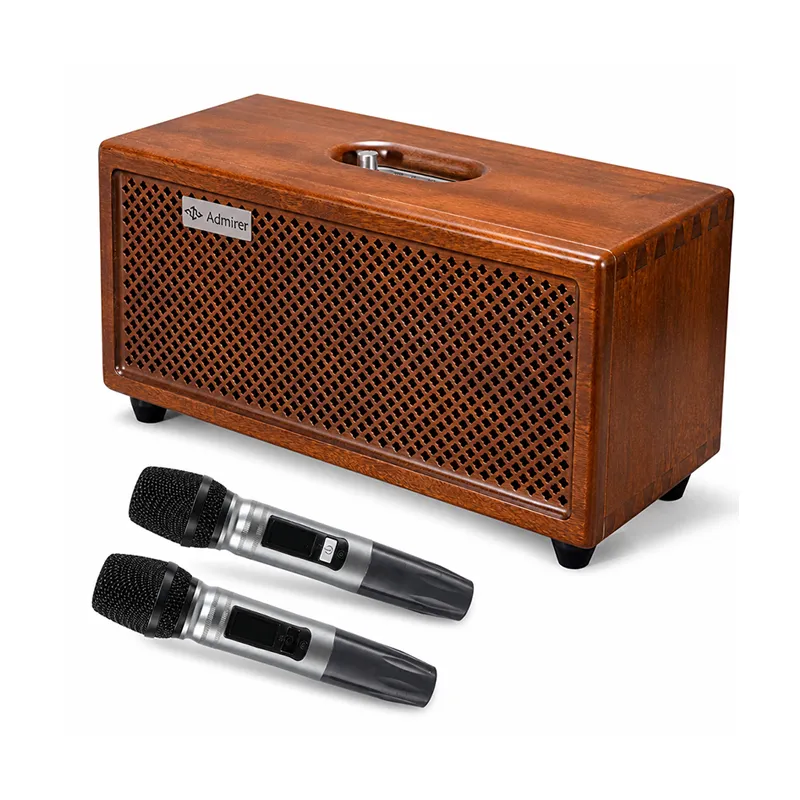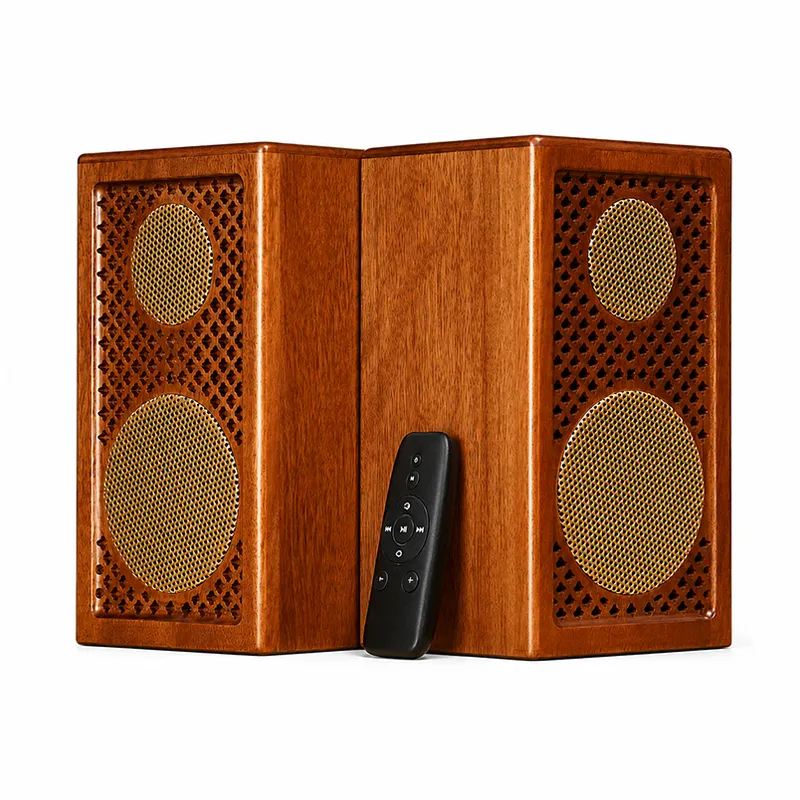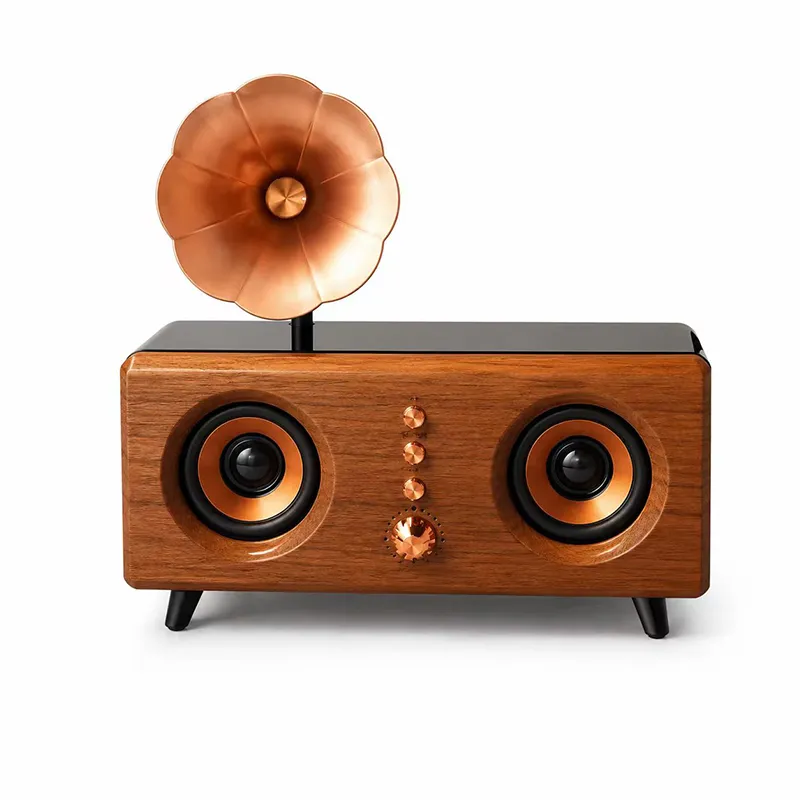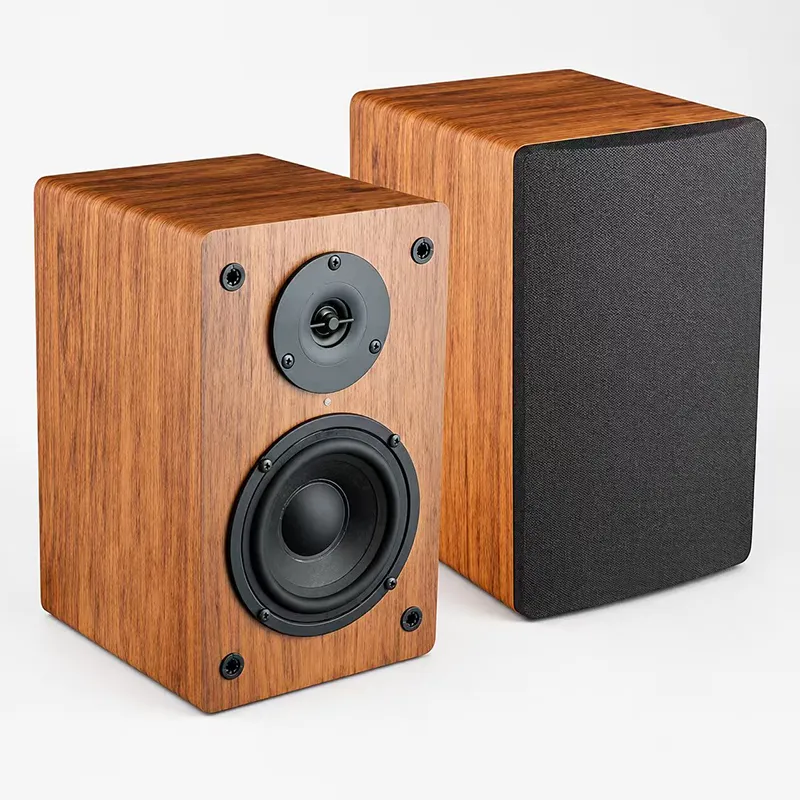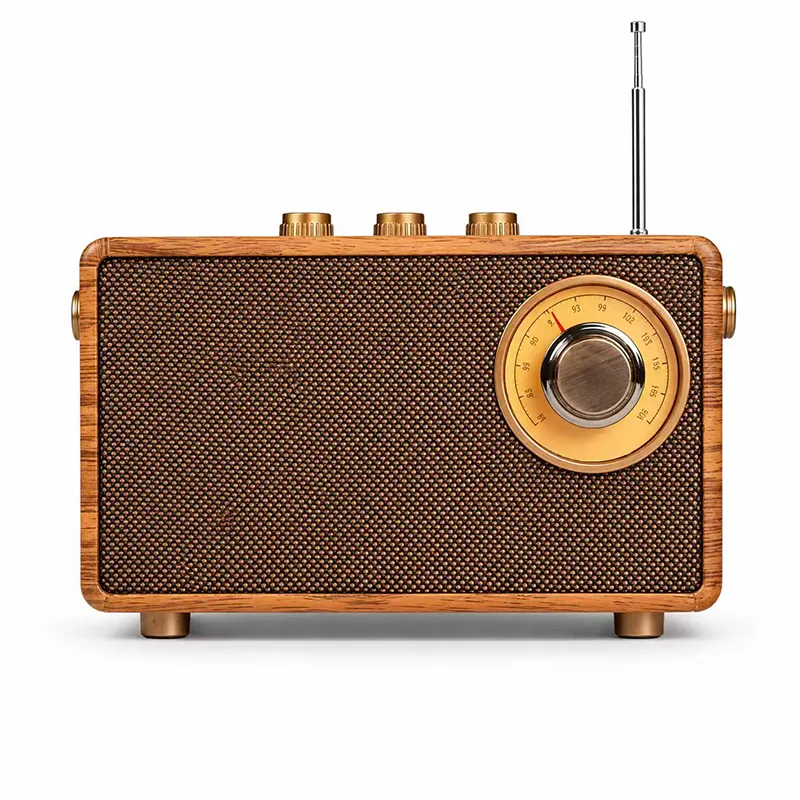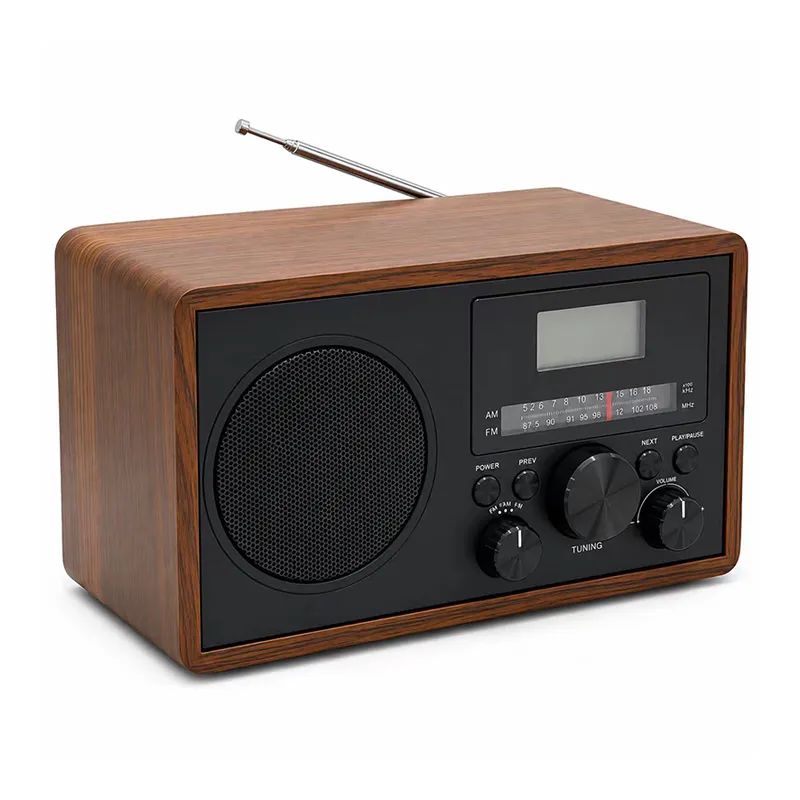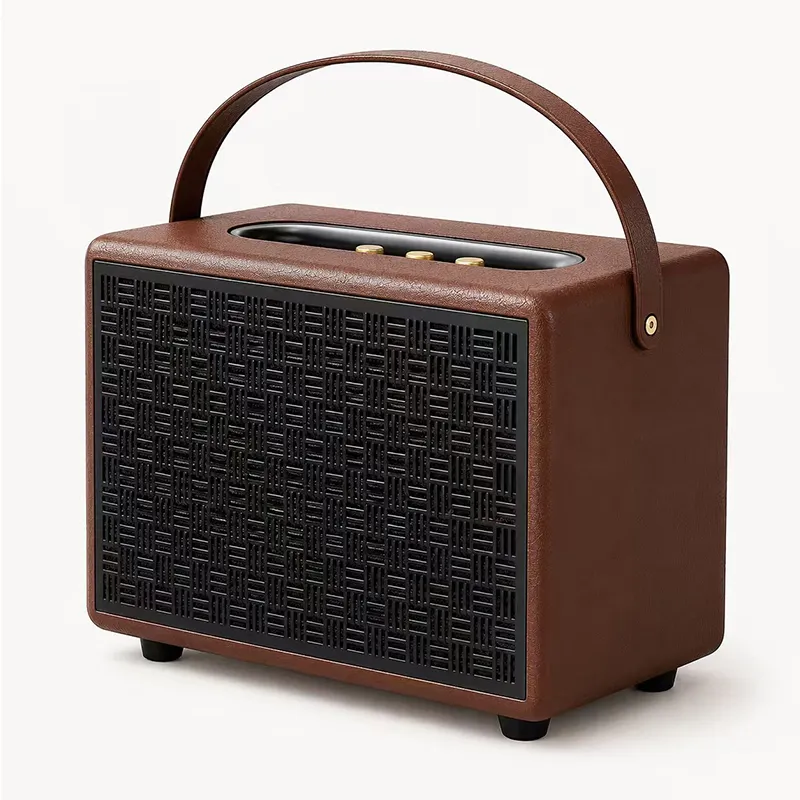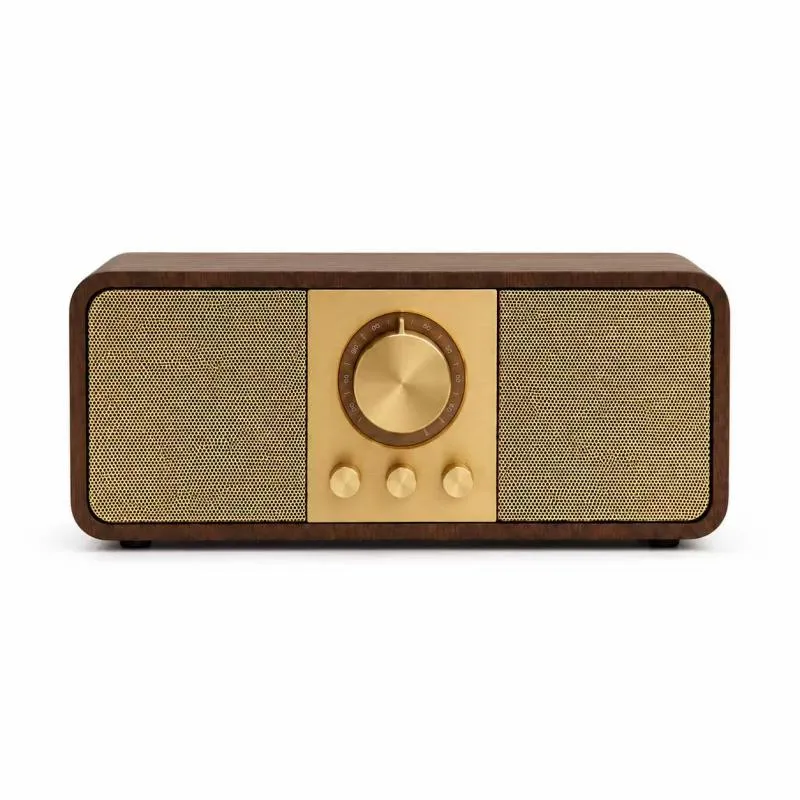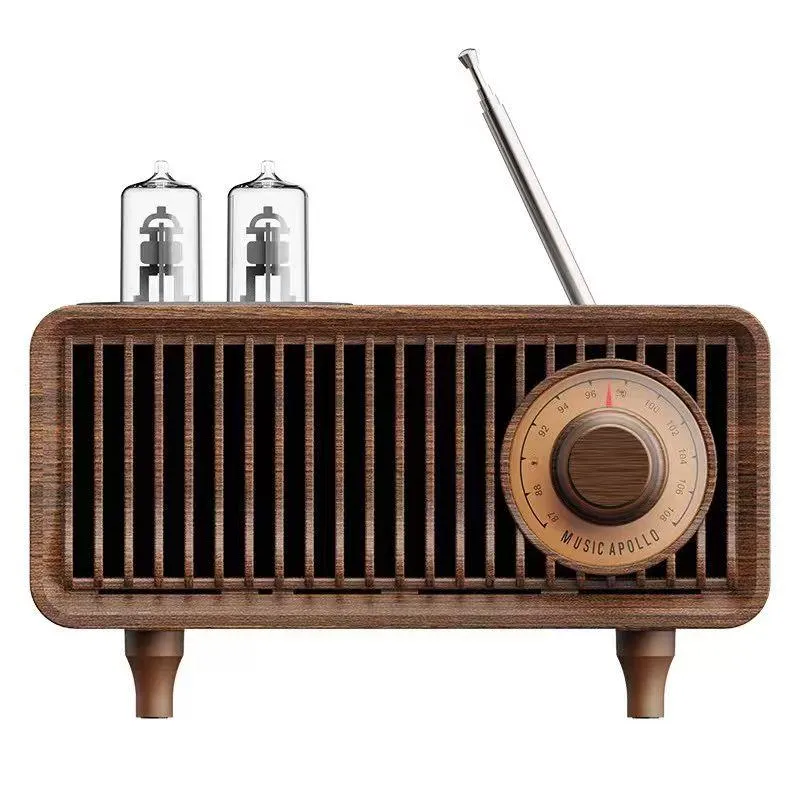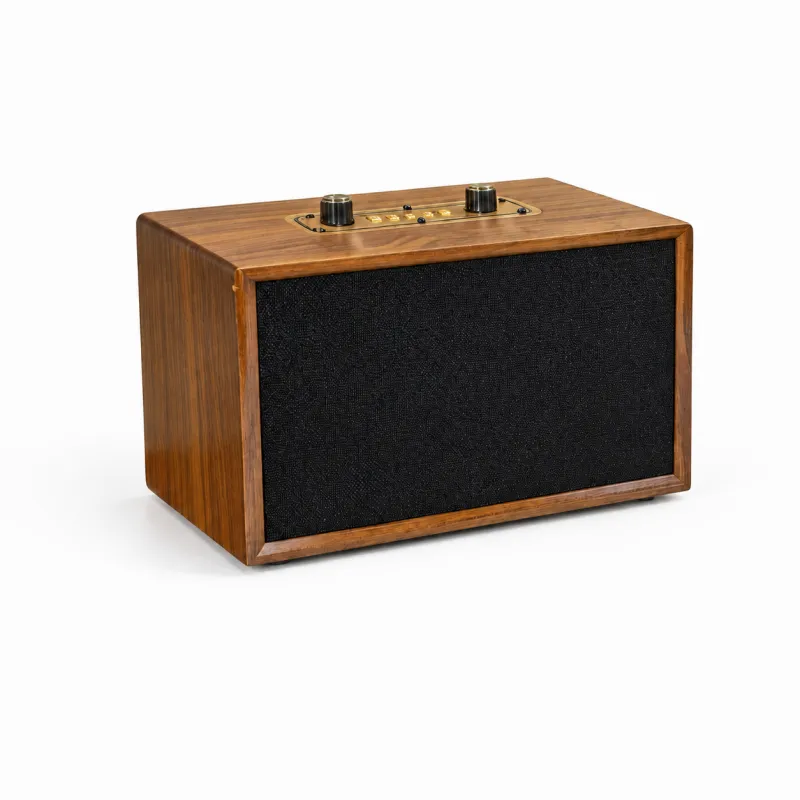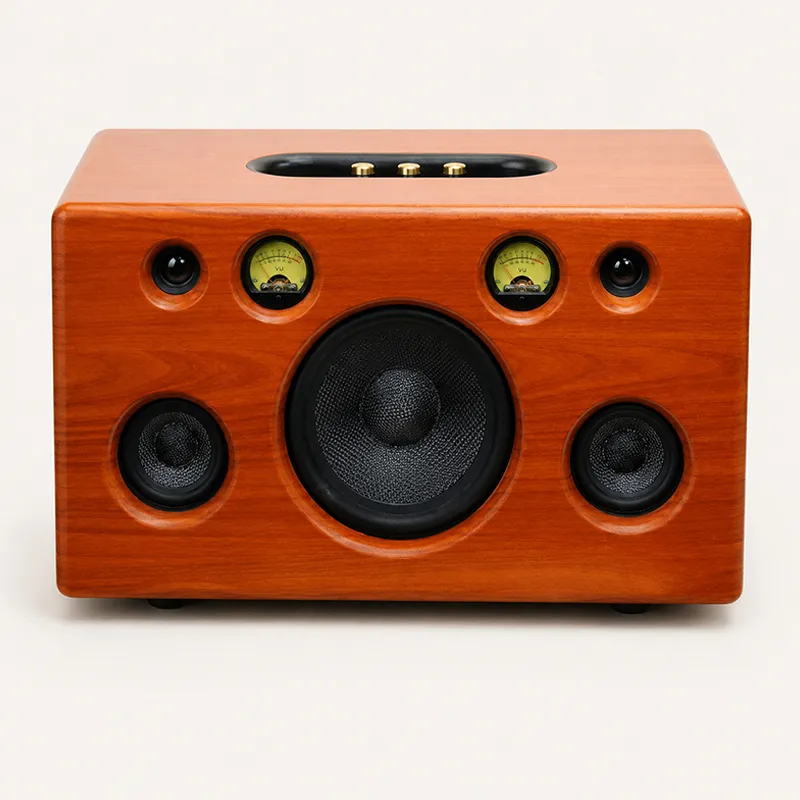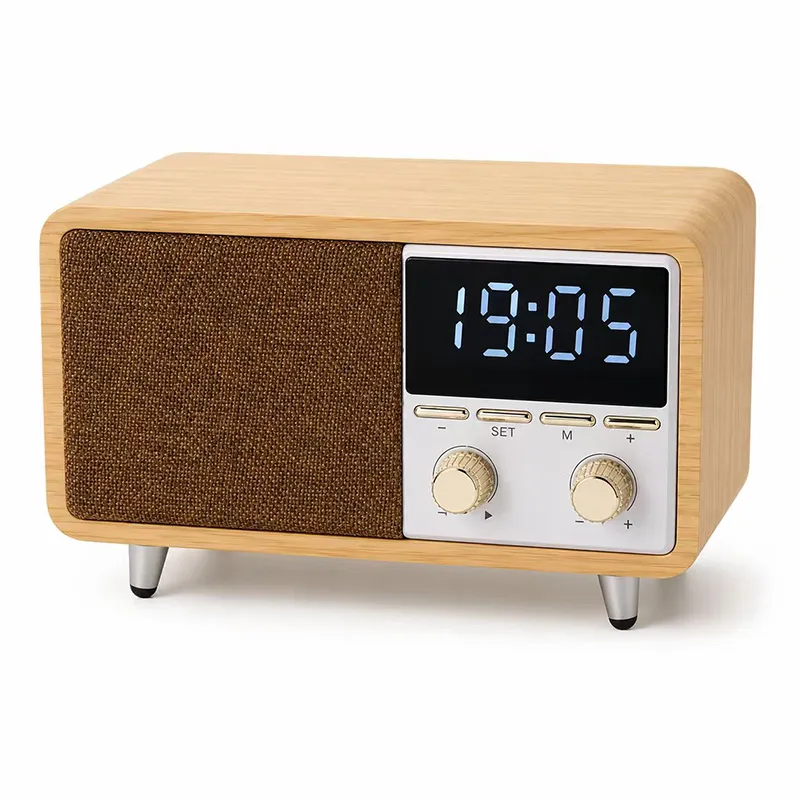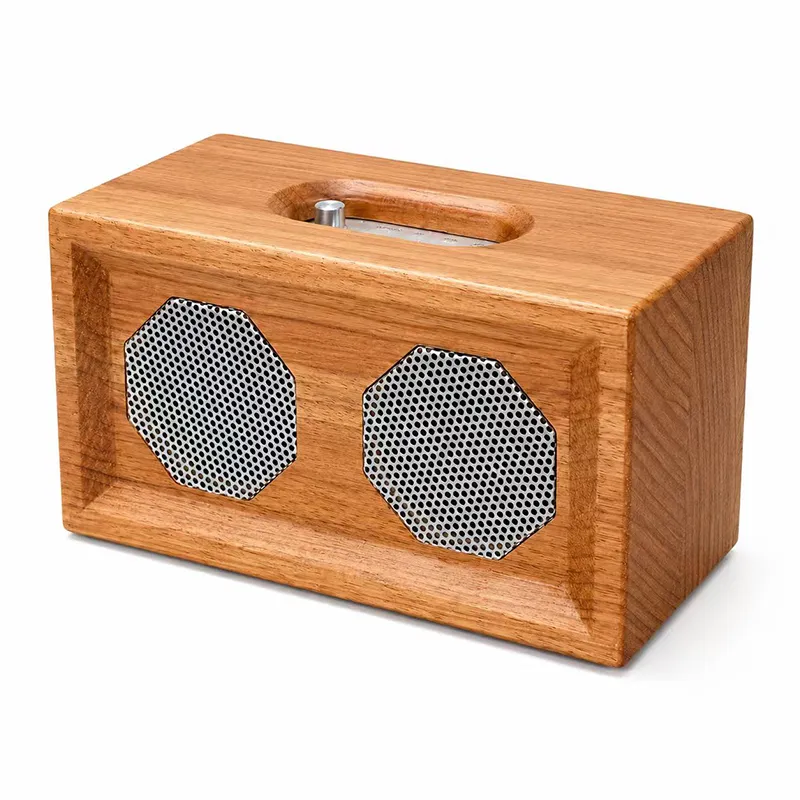
Walk through a hi-fi showroom or look at a row of bookshelf speakers and one detail appears again and again: many cabinets have a wood finish. Sometimes that finish comes from solid timber. In other products, the structure is plywood or MDF with a real-wood veneer on the outside.
That consistency raises a fair question. If plastics can be molded into almost any shape and metals can be extremely strong, why do wooden speaker cabinets remain so common? The answer is not simply tradition, and it is not only about appearance.
The cabinet is part of the acoustic system. It has to hold the drivers securely, manage the air moving behind them, resist mechanical vibration, and still be practical to manufacture. Wood-based materials happen to offer a useful balance across all of those requirements.
What Is the Speaker Cabinet Actually Doing?
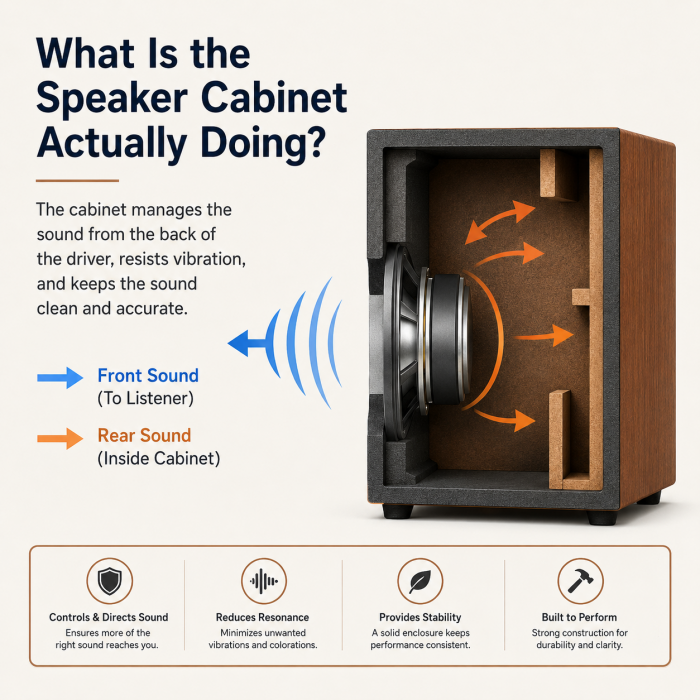
A driver creates sound by moving air. When its cone moves forward, it pushes air toward the listener. At the same time, the rear side of that cone is moving air inside the enclosure.
If the front and rear energy are not controlled properly, they can interfere with each other. The enclosure helps separate and manage that rear acoustic energy so the speaker behaves in a more predictable way.
There is also a mechanical side to the problem. A woofer does not move in isolation; its motion produces forces that are transferred into the cabinet. If large panels bend, buzz, or vibrate too freely, the enclosure starts adding sound of its own.
In a well-designed speaker, that extra contribution is kept under control. The cabinet therefore needs enough stiffness, sensible damping, strong joints, and the correct internal volume for the drivers. This is where wood-based construction becomes especially practical.
Rigidity Matters More Than the “Wood” Label
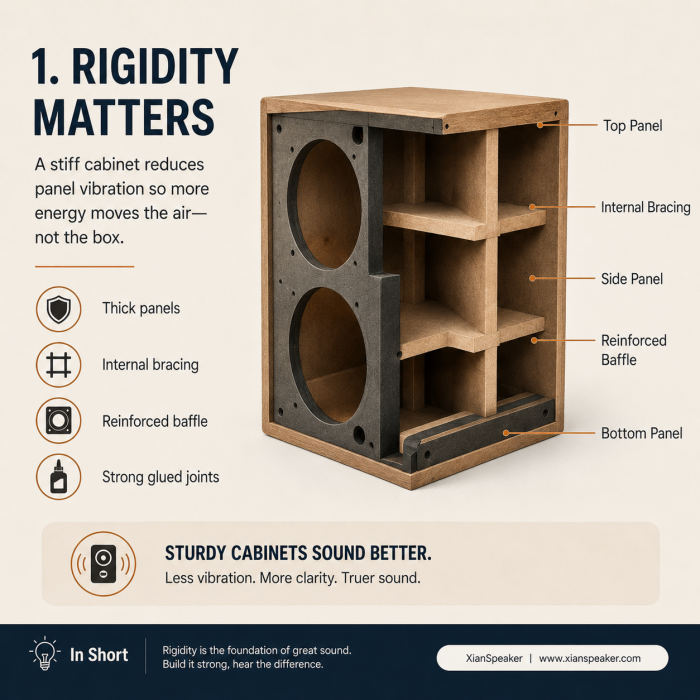
A speaker box must resist repeated forces from the drivers, especially at low frequencies. When a bass driver moves, a weak enclosure can flex with it. Energy that should be moving air then starts moving the cabinet walls instead.
MDF and quality plywood are popular partly because they can form stiff, stable panels without making production unnecessarily complex. They are also easy to combine with common cabinet-building methods.
Manufacturers can further improve stiffness with:
· thicker side, top, and rear panels
· well-positioned internal bracing
· a reinforced front baffle around the drivers
· strong, accurately fitted glued joints
This is why the phrase wooden speaker cabinets does not tell the whole story. Two products can use similar board material and still perform very differently because one has better bracing, panel thickness, and joint design.
A carefully engineered enclosure made from another material can outperform a poorly built wood speaker enclosure. Construction quality matters at least as much as the material name on a specification sheet.
Density and Damping Help Keep the Cabinet Quiet
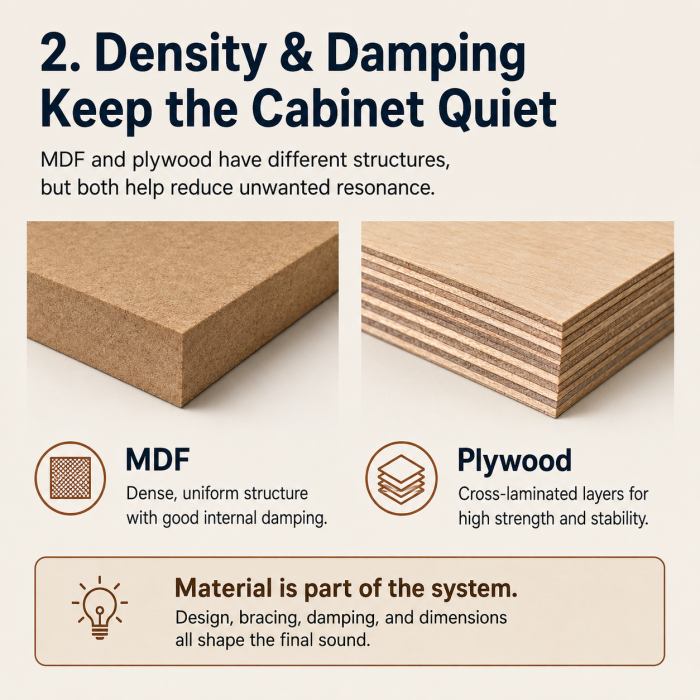
Every cabinet material has resonances. Wood-based panels are no exception. The practical goal in most hi-fi designs is not to make the enclosure sound “musical,” but to stop it from adding obvious coloration of its own.
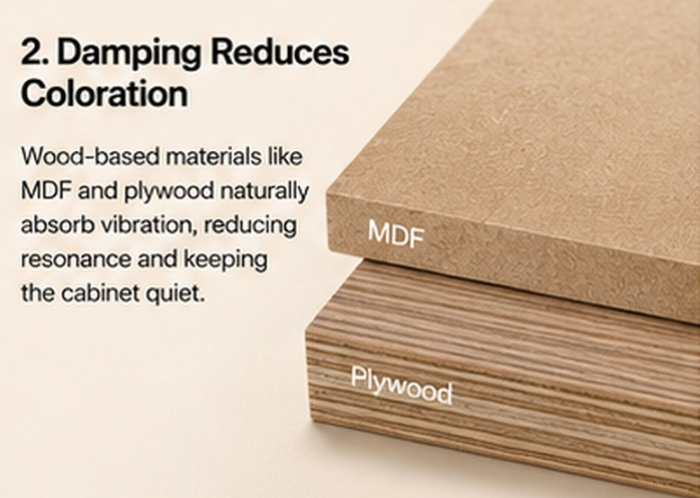
MDF is widely used because its structure is relatively even and it provides useful internal damping. For an MDF speaker cabinet, that consistency also makes machining and repeatable production easier.
Plywood behaves differently. Its cross-laminated layers can provide very good stiffness for the weight, which is why a well-designed plywood speaker cabinet is common in applications where strength and manageable mass are both important.
Neither material is automatically the winner. Panel thickness, cabinet dimensions, bracing, internal damping, driver output, and the overall acoustic design all affect the final result. The material works as part of a system rather than as a stand-alone guarantee of sound quality.
Wood-Based Panels Are Practical to Manufacture
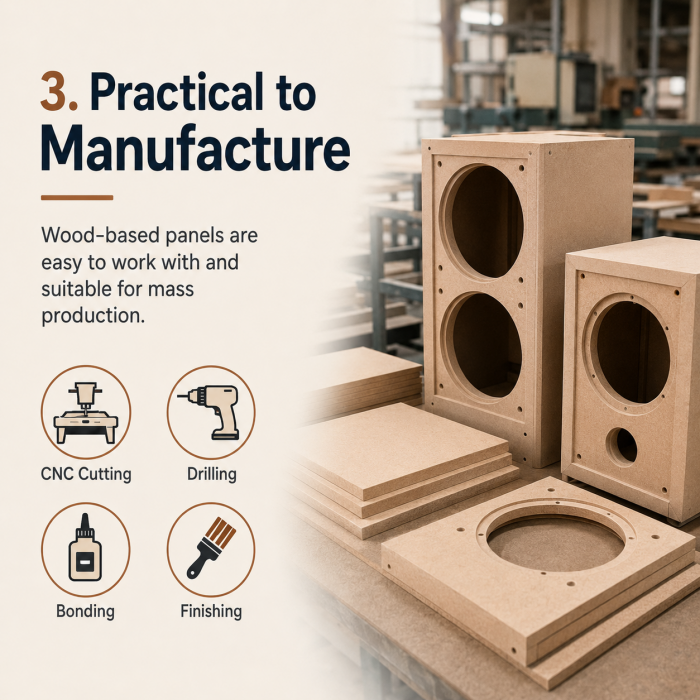
Acoustics explain only part of wood's popularity. A speaker also has to be built efficiently and finished consistently, especially when the same model is produced in quantity.
MDF, plywood, and other wood-based boards work well with familiar manufacturing processes. They can be:
· cut accurately on CNC equipment
· drilled and routed for drivers, ports, and terminals
· sanded before finishing
· bonded with strong adhesives
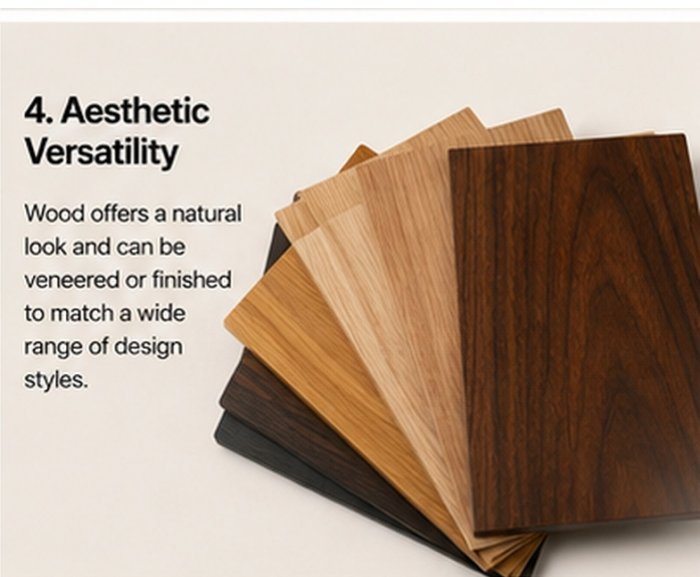
· covered with veneer or laminate
· painted in a wide range of finishes
· formed into curved or decorative shapes with suitable construction methods

That flexibility gives a wood speaker design room to be both functional and recognizable. The same family of materials can be used for a simple rectangular bookshelf model, a retro-inspired desktop speaker, a decorative home-audio product, or a more sculptural enclosure.
For brands trying to avoid the look of a generic molded plastic box, that design freedom has real commercial value.
The Visual Character of Wood Matters Too
Not every reason for choosing a cabinet material appears on a frequency-response chart. The exterior of a speaker is part of how people experience the product in a room.
Plastic often suggests portability, practicality, or consumer electronics. Metal can feel technical, precise, and industrial. Wood tends to communicate a different set of associations: furniture, craft, warmth, natural texture, and permanence.
Those qualities matter most when a speaker stays visible all day rather than being packed away after use. Wooden speakers can sit more comfortably in spaces such as:
· living rooms
· bedrooms
· home offices
· cafés and restaurants
· hotels
· wellness or hospitality spaces
In those settings, the speaker is both an electronic product and part of the interior. A finish that resembles a piece of furniture can make the product easier to display on a shelf, desk, sideboard, or cabinet.
Is Solid Wood Really the Premium Choice?
“Solid wood” sounds premium, so it is easy to assume that it must also be the best acoustic option. In practice, the answer is more complicated.
Natural timber has grain, and its dimensions can change as humidity changes. Different pieces of the same species can also behave differently. None of this makes solid wood unsuitable; it simply means the material has to be understood and engineered around.
For many speaker cabinets, engineered wood products are more predictable and easier to use consistently.
MDF
Medium-density fiberboard has a fairly uniform structure. It machines cleanly, accepts paint and laminate well, and can also be covered with natural wood veneer. Those traits explain why MDF is so common in home-audio cabinets.
Plywood
Quality plywood is built from multiple layers whose grain directions alternate. That layered construction can provide excellent stiffness and strength without requiring the mass of some denser panel products.
Solid Wood
Solid wood offers genuine grain, tactile variation, and a premium visual character that veneered products can only imitate to a point. At the same time, the cabinet design has to allow for the material's natural movement and its own resonance behavior.
As a result, a product marketed as a “wooden speaker” may be made from solid timber, plywood, veneered MDF, or a combination of materials. The label describes the broad design direction, not necessarily the complete structure.
Wood vs. Plastic vs. Metal Speaker Cabinets
So, is wood the best speaker cabinet material? There is no single answer because different products solve different problems.
Wood-based cabinets are a strong fit for bookshelf speakers, home stereo systems, decorative speakers, and products where enclosure rigidity and appearance both matter.
Plastic is especially useful for portable products. Complex shapes can be molded efficiently, weight can be kept down, and weather-resistant designs are often easier to achieve.
Metal brings high strength and a distinctly modern look, but it can also ring or resonate if the enclosure is not carefully controlled.
A more useful design question is therefore not “Which material is best?” but “Which material best suits this speaker, its size, its intended environment, and its acoustic targets?”

Do Wooden Speaker Cabinets Really Sound “Warmer”?
People often describe wooden speakers as having a warm sound. That can be a meaningful description of the overall listening experience, but it should not be treated as a direct property of the cabinet material alone.
A speaker's final character depends on many interacting decisions, including:
· driver selection and driver design
· crossover design
· enclosure volume
· sealed or ported construction
· internal damping
· cabinet resonance control
· DSP tuning
· amplifier design
· placement within the room
A rigid, well-damped wooden cabinet can reduce unwanted vibration and give the drivers a stable enclosure to work from. That is useful engineering. It is not the same as saying that wood automatically produces a warmer or better sound.
In practice, thoughtful system design matters more than a material-based marketing claim.
What Should You Look for in a Wooden Speaker?
When comparing wooden speakers, the grain pattern is only the first thing you see. The more important details are usually in the construction.
A good cabinet should feel substantial rather than hollow or flimsy. Look at how cleanly the panels meet, whether the joints appear precise, how the front baffle is built, and whether the finish is consistent. Internal reinforcement and controlled dimensions are also signs that the enclosure was designed as a structural part of the speaker rather than as simple packaging.
The intended use matters as well. A compact wooden Bluetooth speaker on a desk has very different requirements from a pair of stereo speakers in a living room or a large subwoofer handling deep bass.
In other words, judge the cabinet in the context of the product's purpose.

Why Wooden Speakers Still Matter Today
Consumer electronics keep getting smaller, lighter, and less visually intrusive. Wooden speakers remain interesting partly because they can move in the opposite direction: instead of trying to disappear, they can become a deliberate part of the room.
A well-resolved wooden speaker combines natural-looking materials with modern audio technology. For some listeners, that is simply more pleasant to live with than another anonymous black plastic enclosure.
For designers and audio brands, wood-based construction also creates more opportunities to develop recognizable proportions, finishes, textures, and product identities.
That is probably why wooden speaker cabinets have stayed relevant for so long. Wood is not a magical acoustic ingredient. Its value comes from a practical combination of stiffness, damping, manufacturability, durability, and visual character.
When those strengths are matched with careful acoustic engineering, the cabinet does more than hold the drivers. It helps the speaker perform consistently while also giving the product a place in the surrounding space.
The next time you look at a wooden speaker, pay attention to more than the finish. Notice the cabinet shape, panel thickness, joints, grille, proportions, and how the product sits in the room. Then listen. Those details explain much more about why speaker designers keep returning to wood than the word “wooden” by itself.
xianspeaker
xianspeaker: high-end wood & bamboo speakers. 5,000㎡ workshop, strict QC, innovative design. Trusted globally.