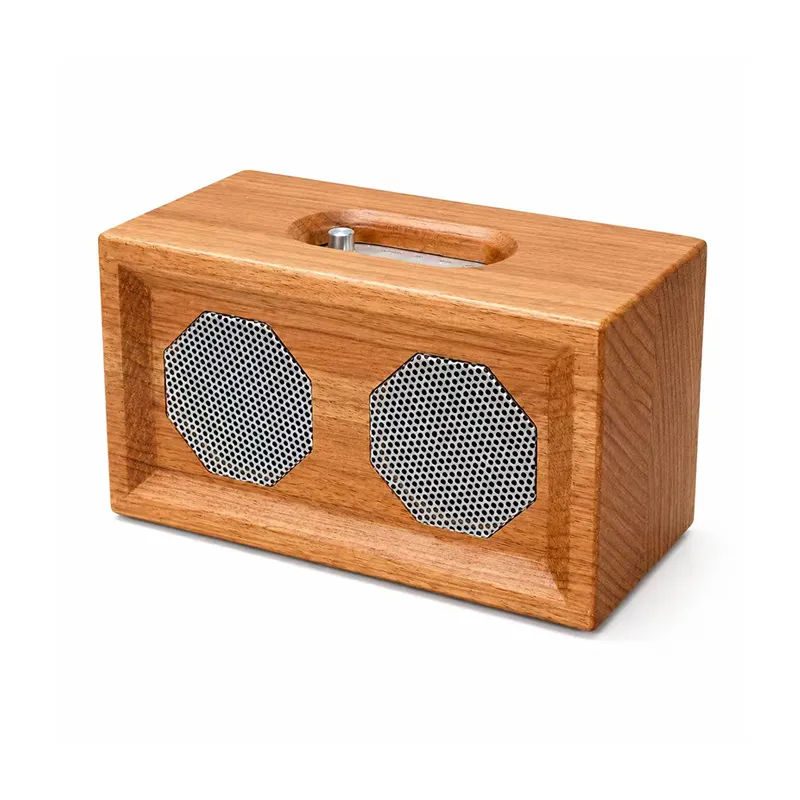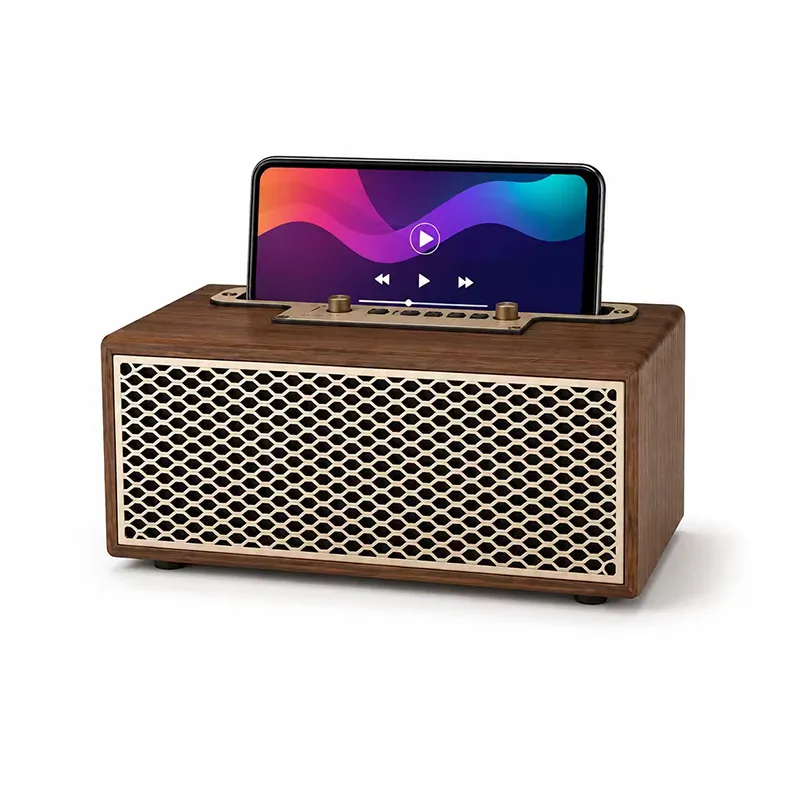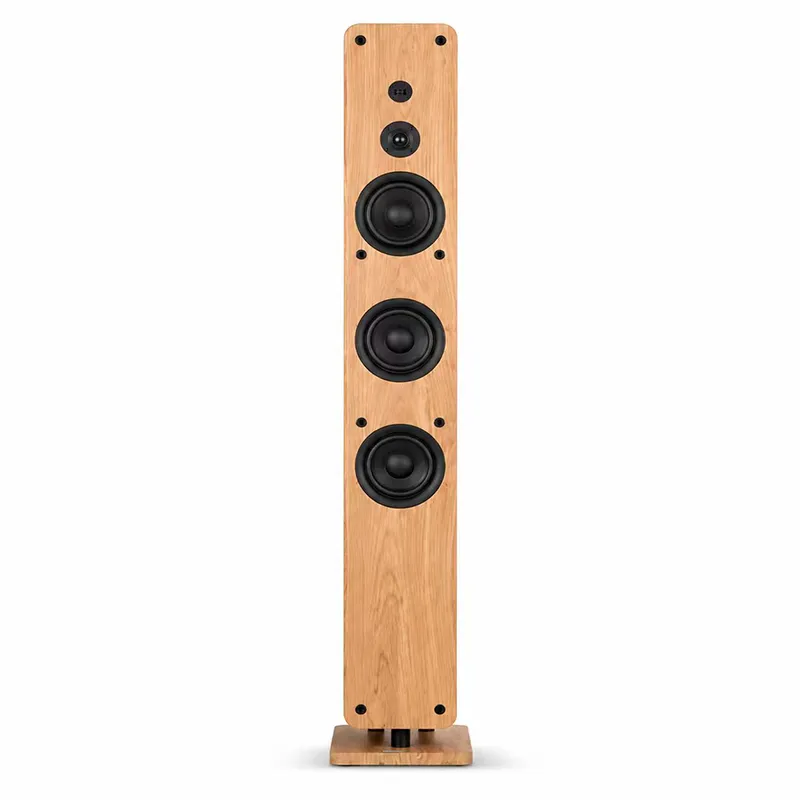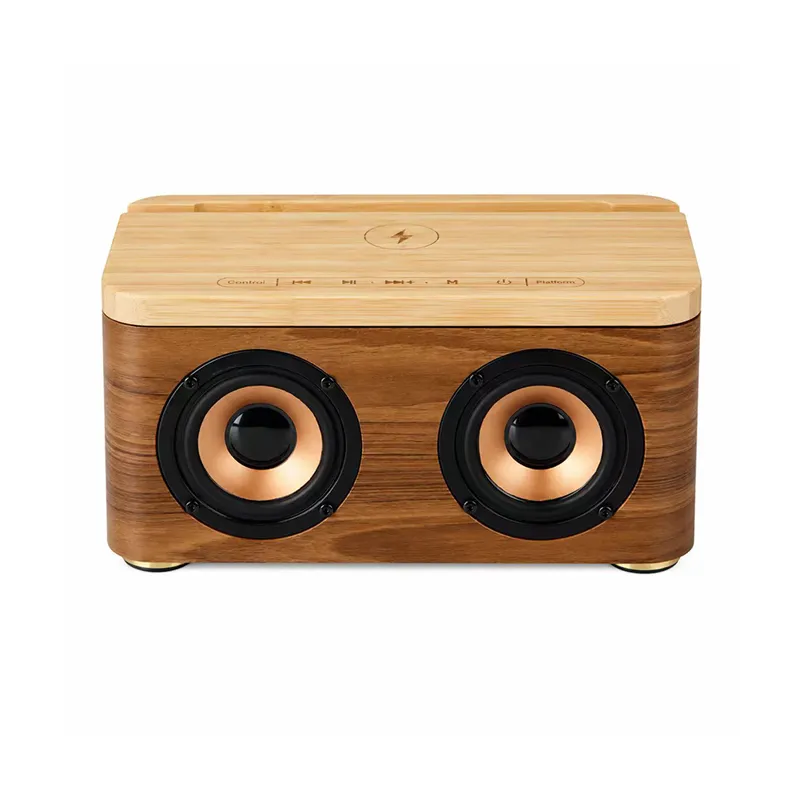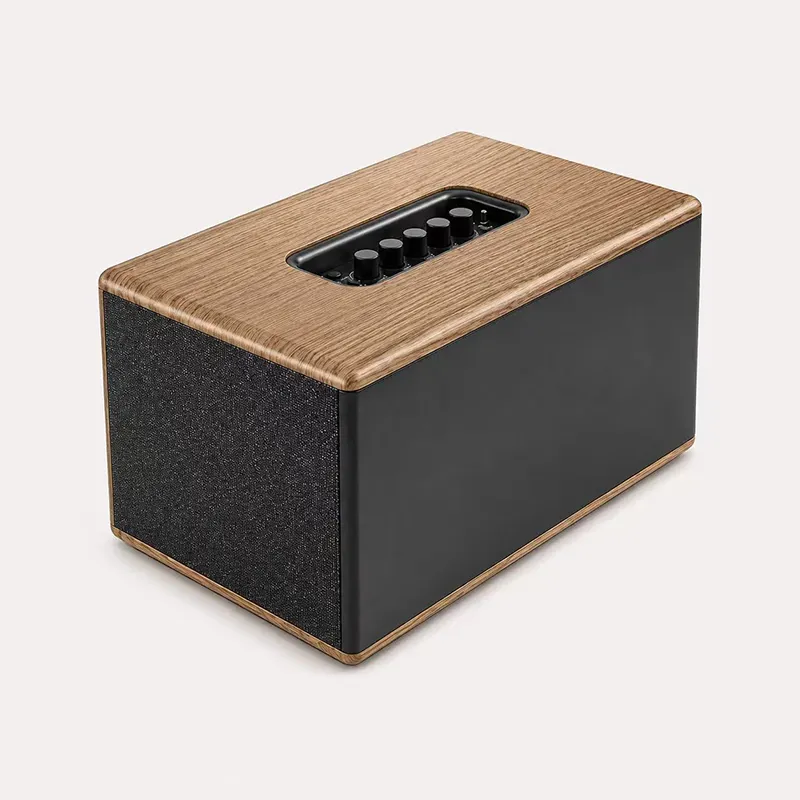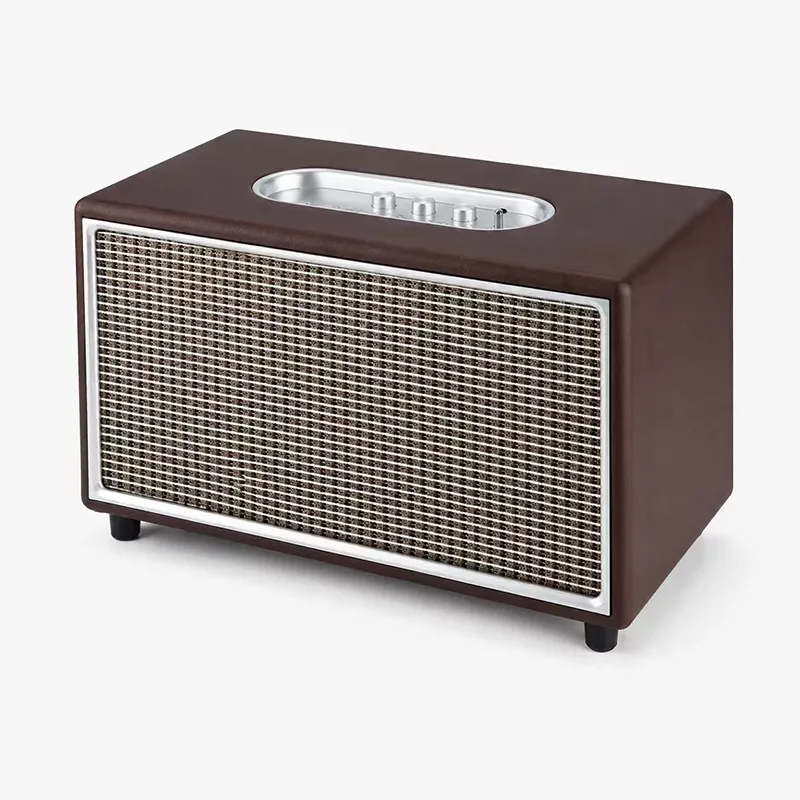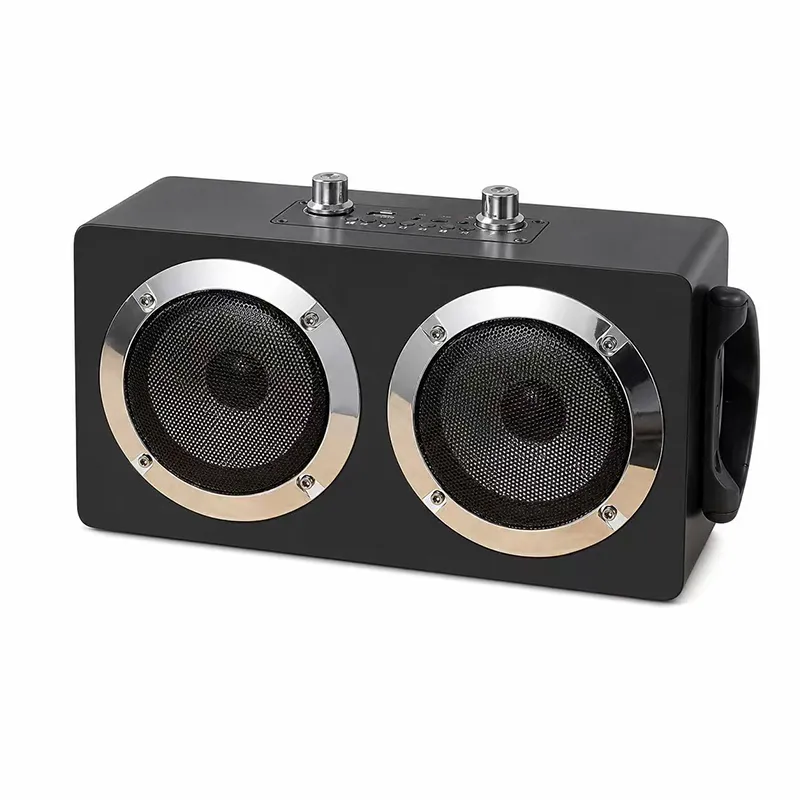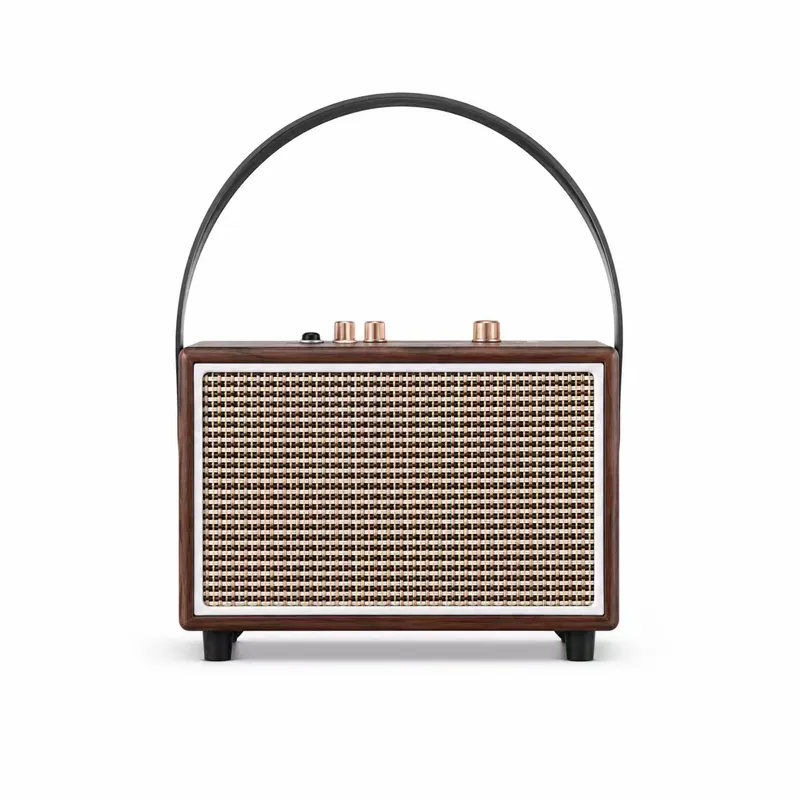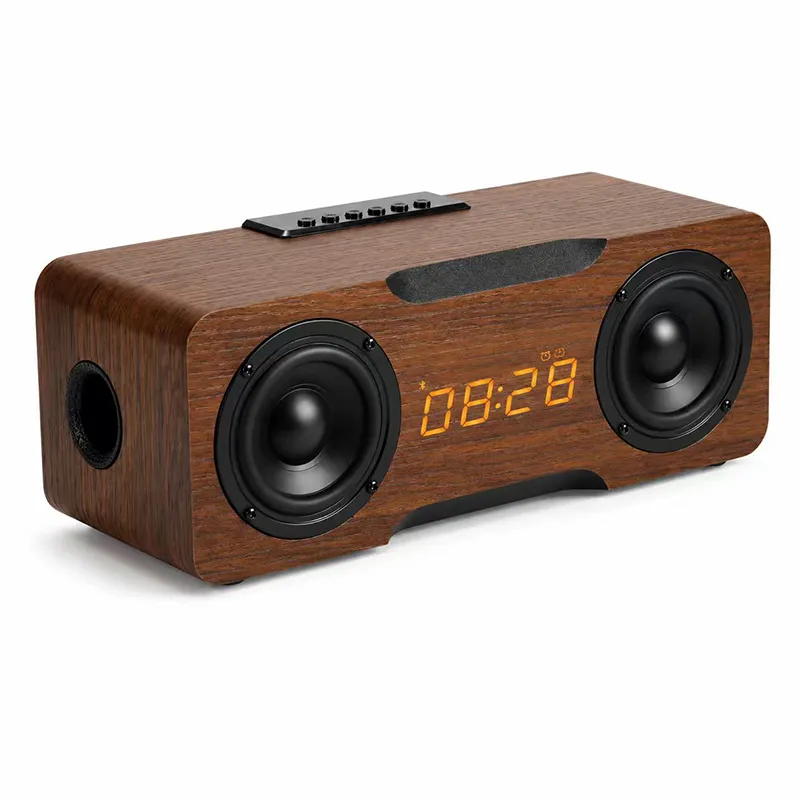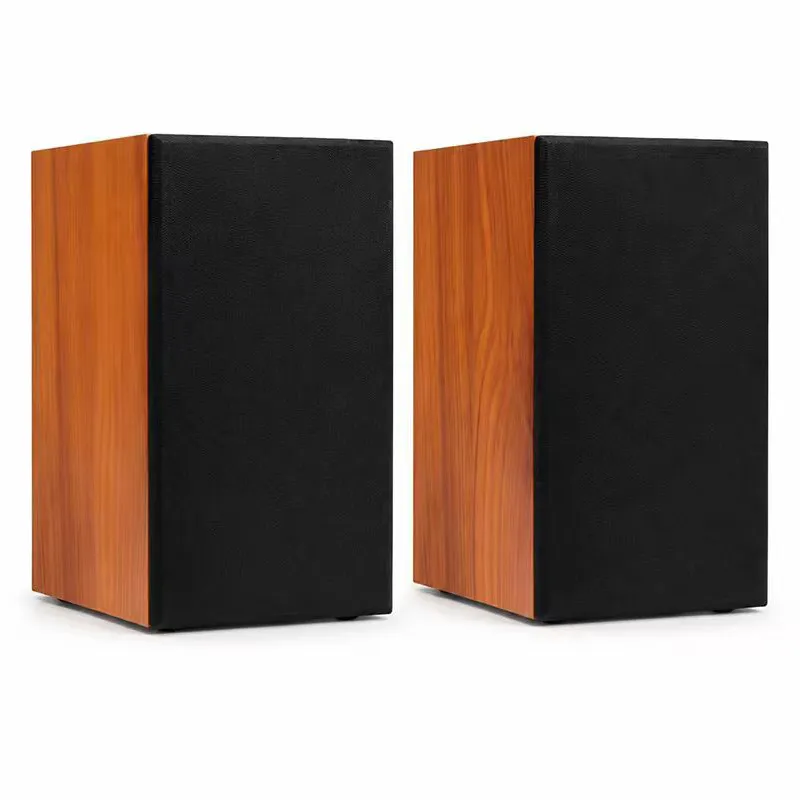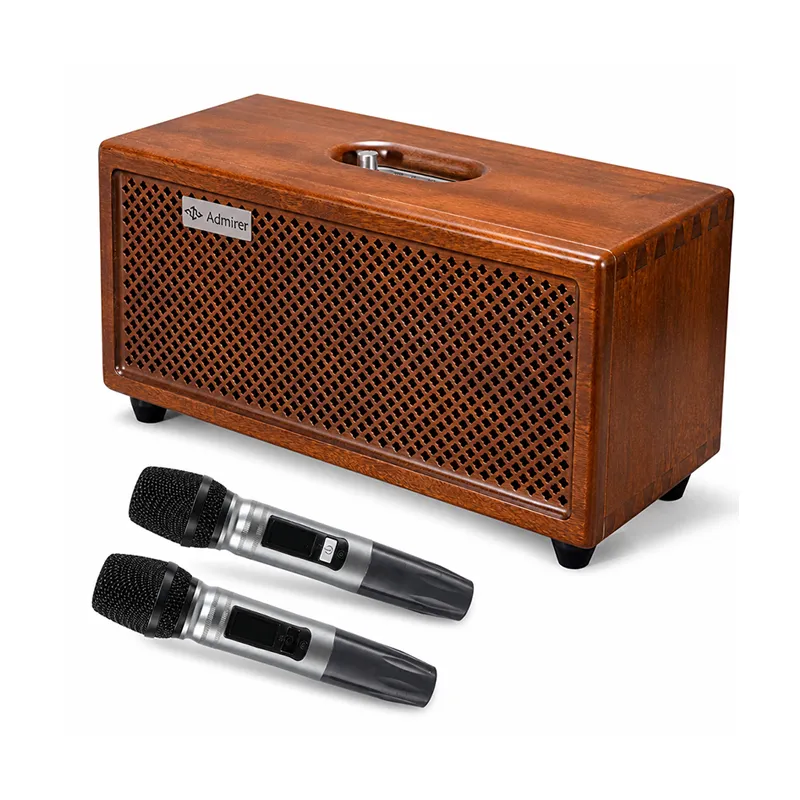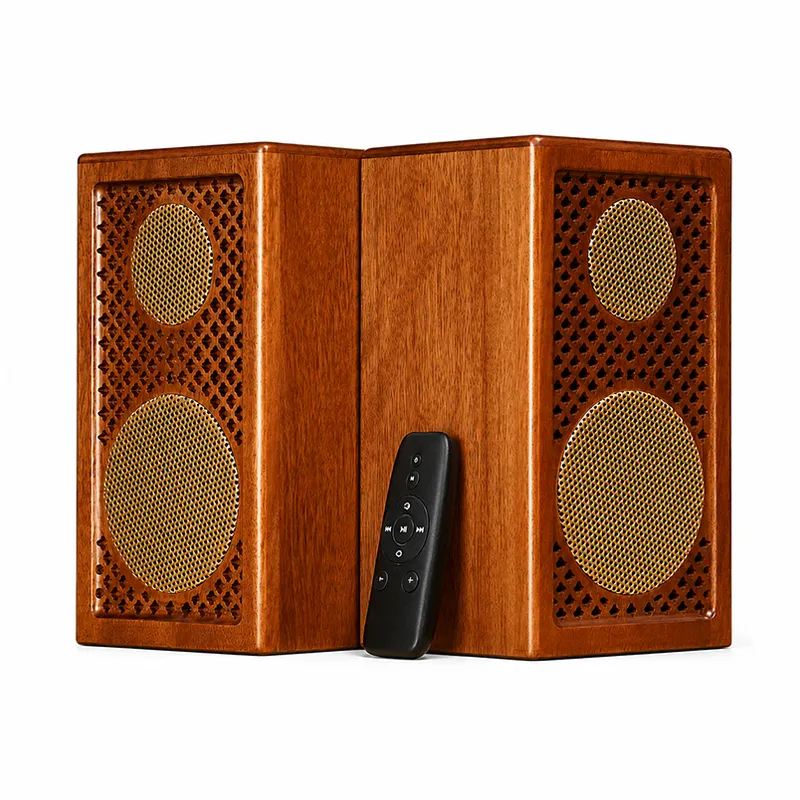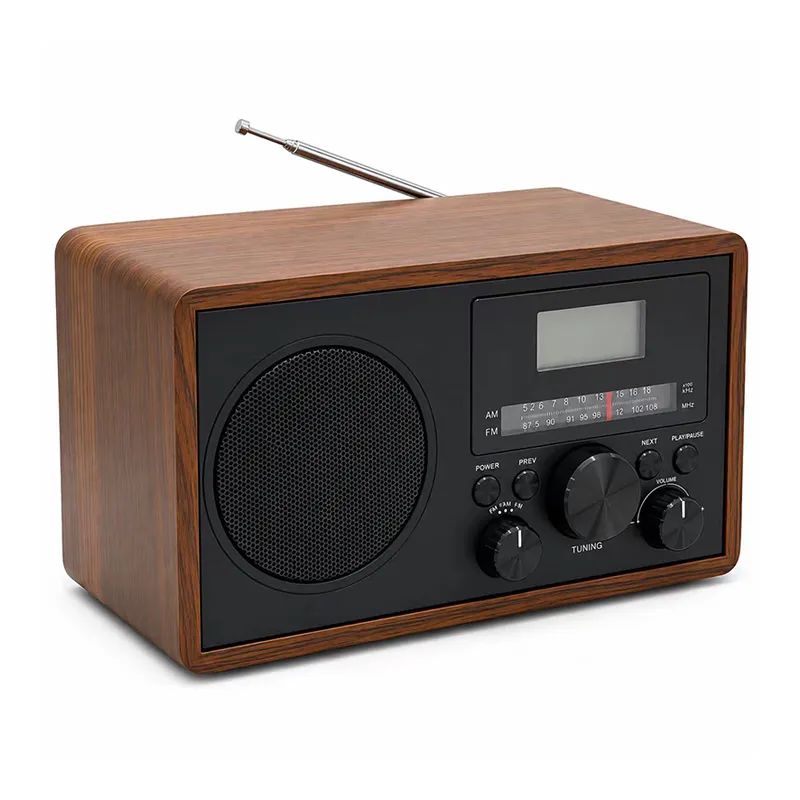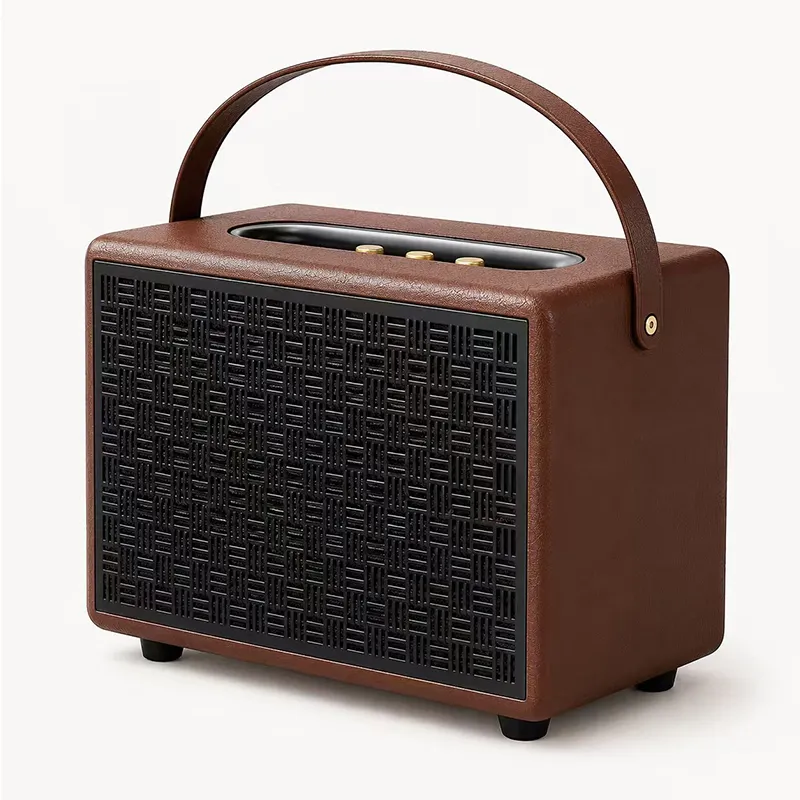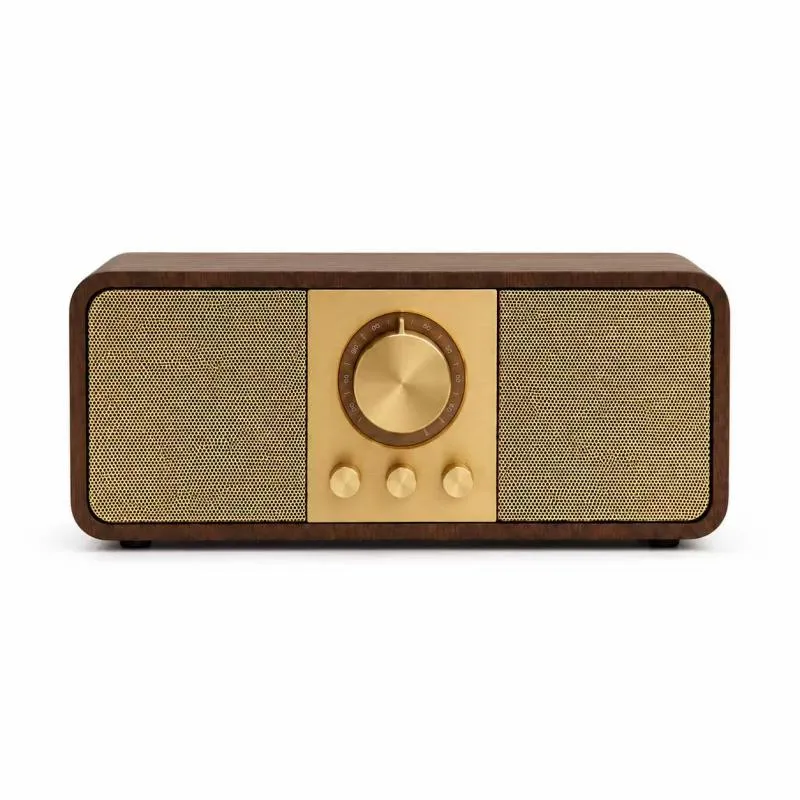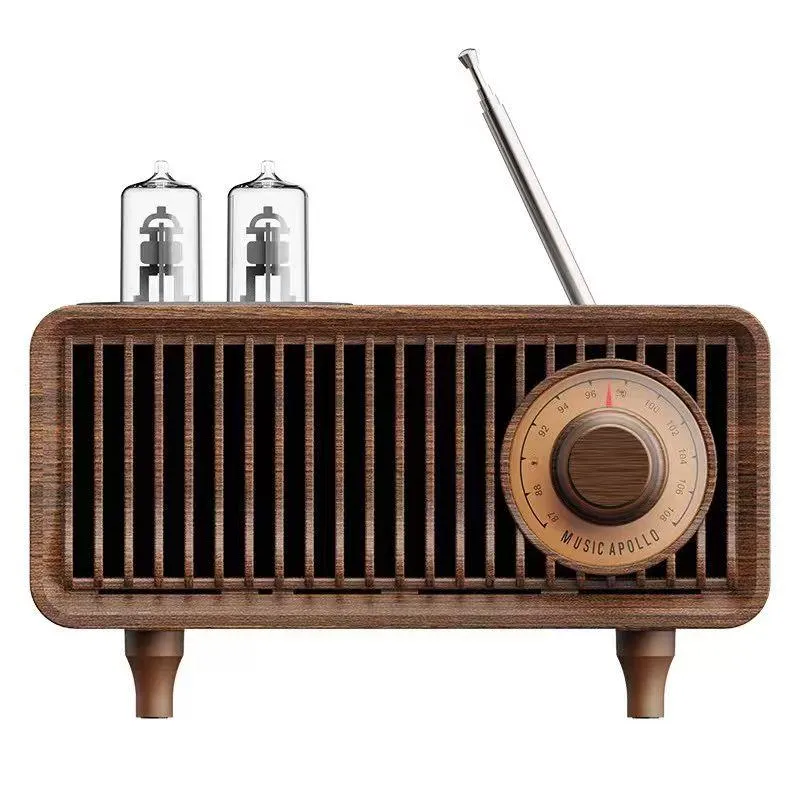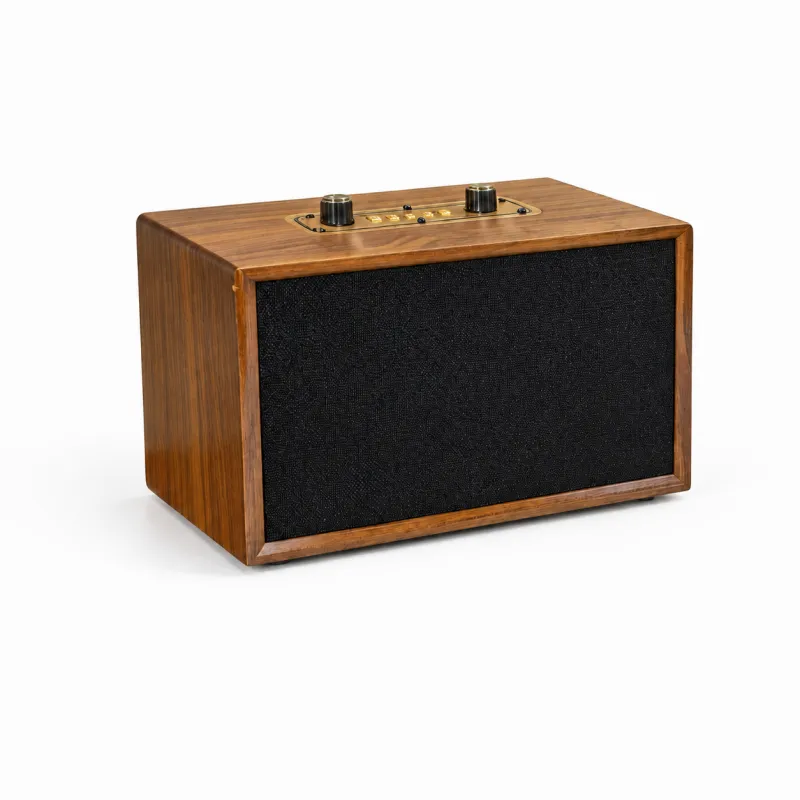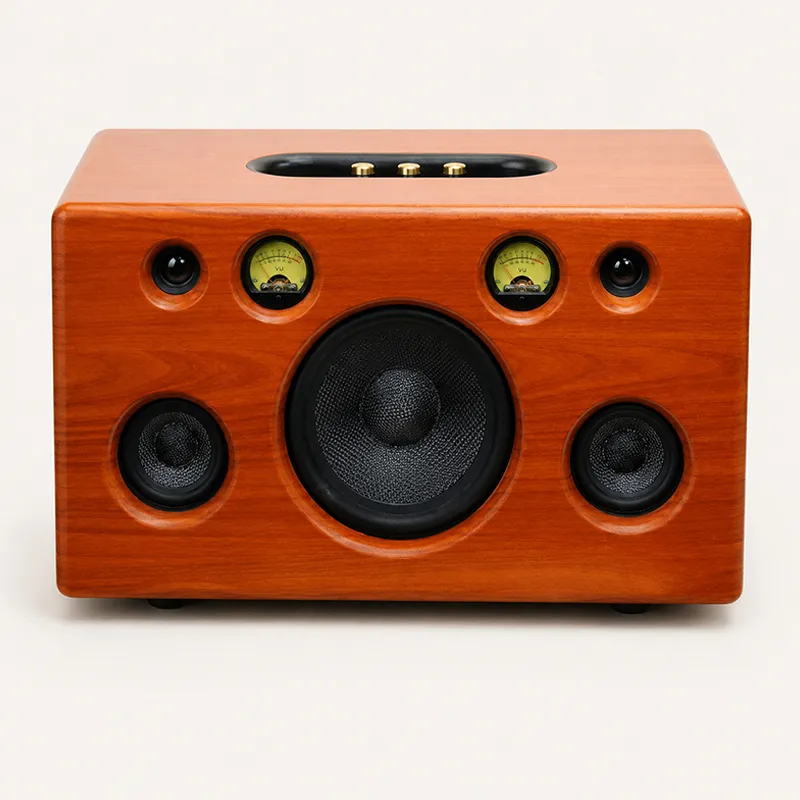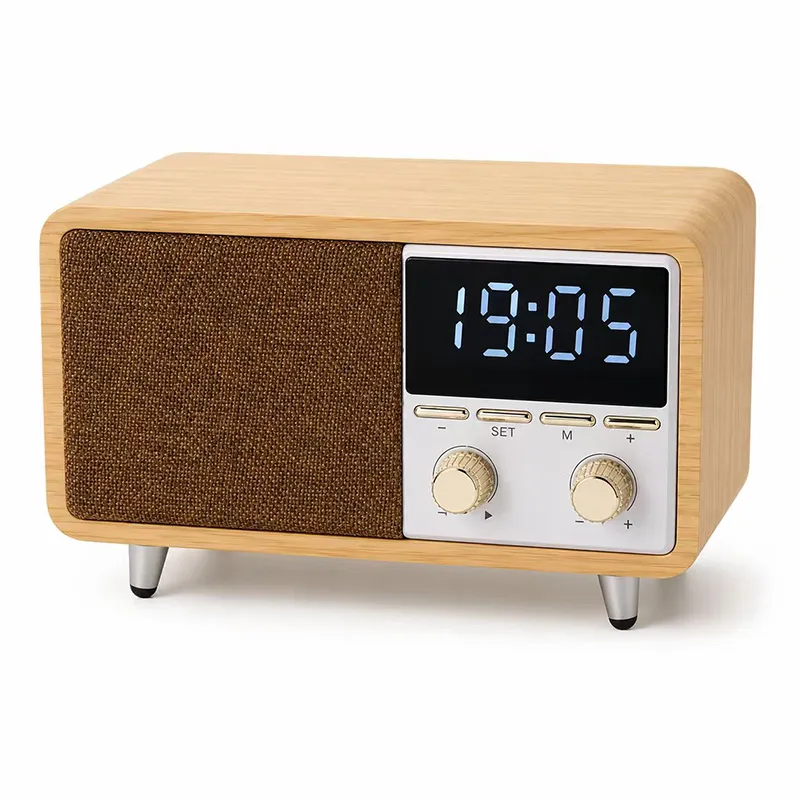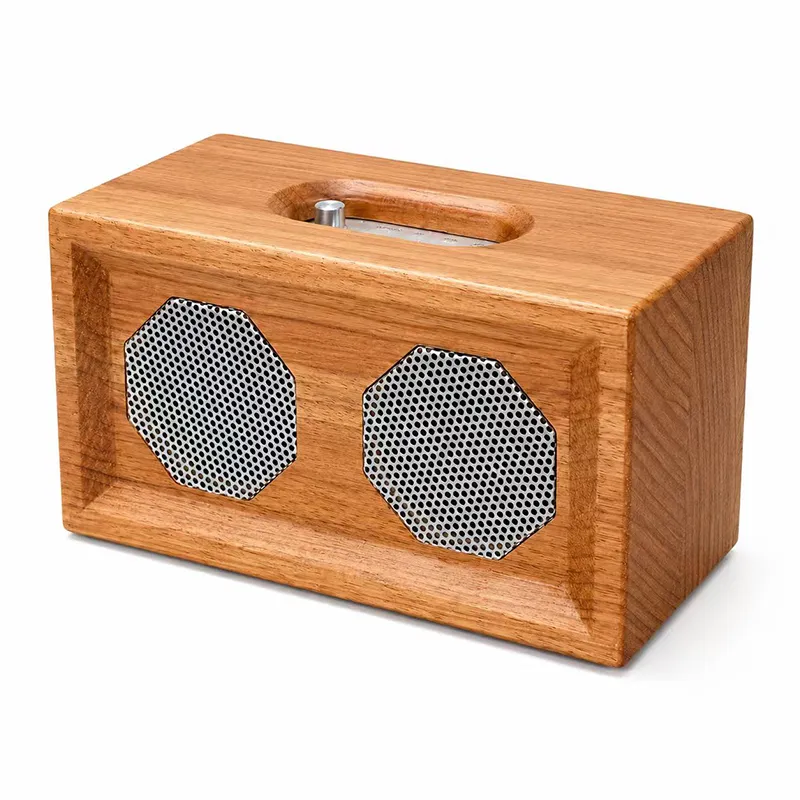






When designing a speaker, many people pay attention to the driver, amplifier power, and appearance. However, the speaker cabinet is also a very important part of the final sound.
The cabinet is not only a box that holds the speaker driver. It controls the air movement behind the speaker unit and affects bass response, sound balance, and overall performance.
In our experience as a speaker manufacturer, different customers have different requirements. Some customers need accurate sound for professional audio products. Some customers need stronger bass and higher output for entertainment or commercial use.
Because of this, choosing the right enclosure design is very important.
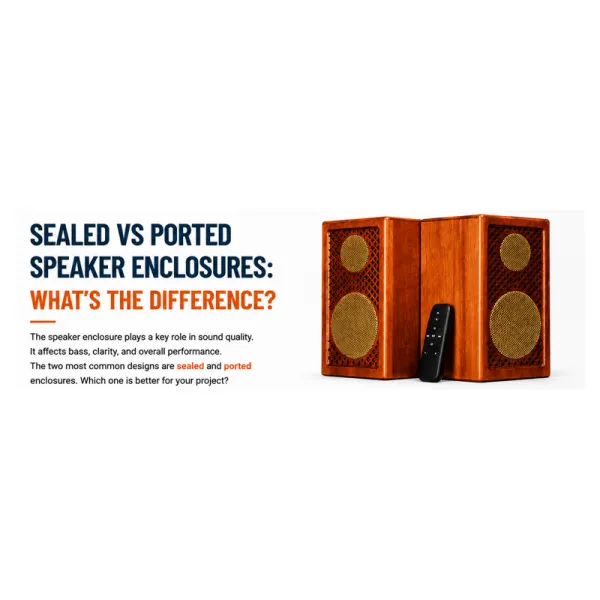
The two most common speaker enclosure designs are:
· Sealed speaker enclosure
· Ported speaker enclosure
Both designs are widely used in home audio, professional speakers, stage speakers, and custom speaker projects. The better choice depends on the product application and sound target.
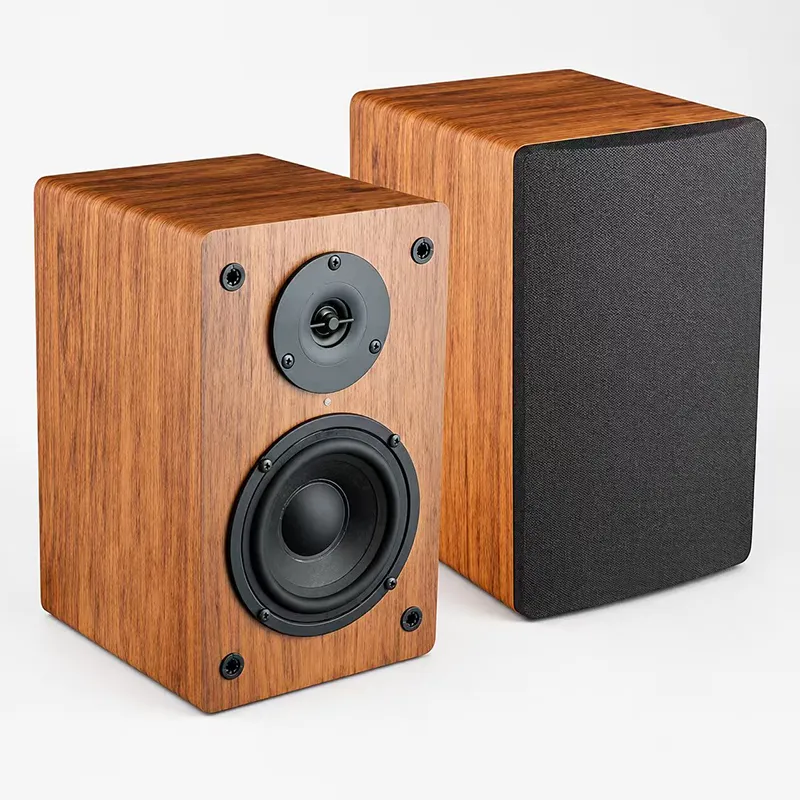
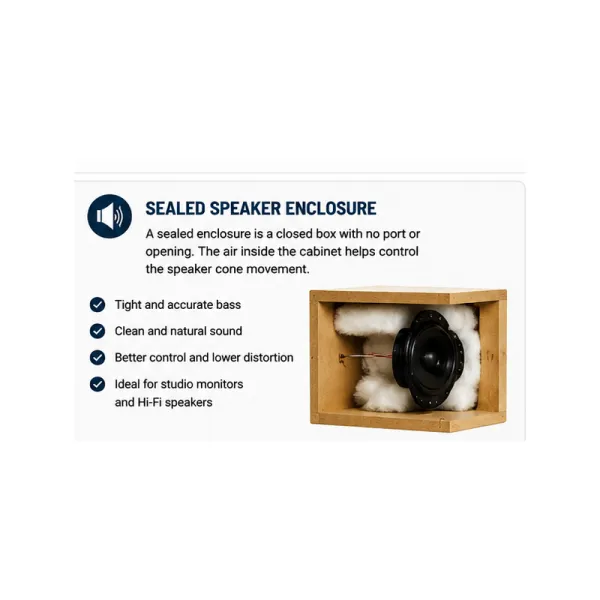
A sealed speaker enclosure is a closed cabinet without a port or opening.
During production, the cabinet is designed to be airtight. The air inside the box works together with the speaker driver. When the cone moves forward and backward, the air pressure inside the cabinet helps control the movement.
This design gives the speaker a more controlled response.
Many sealed speakers are known for:
· Clean sound
· Accurate bass
· Better control
· Lower cabinet noise
For example, studio monitor speakers often use sealed cabinet designs because users need to hear the original sound clearly.
From a manufacturing point of view, sealed cabinets are usually easier to tune. Engineers mainly focus on cabinet volume, cabinet strength, damping material, and driver matching.
However, sealed speakers also have some limitations.
Because there is no extra airflow from a port, they normally need more amplifier power to produce very strong bass. For applications that require very high sound output, a ported design may be a better solution.

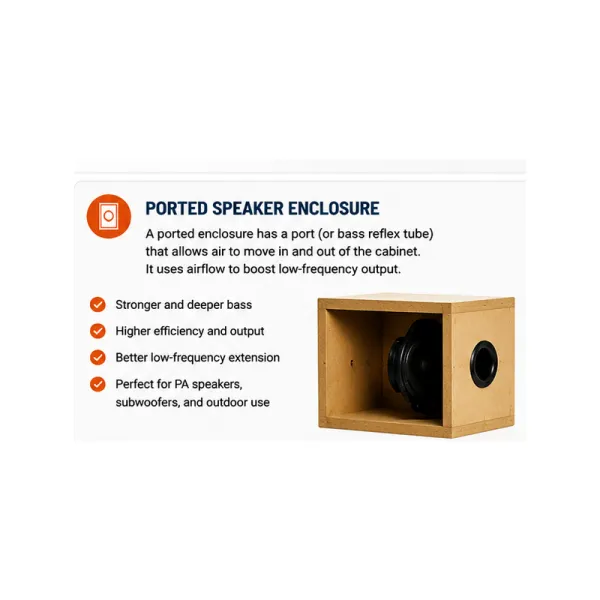
A ported speaker enclosure has a special opening called a port or bass reflex port.
The purpose of this port is to use the air movement inside the cabinet to improve low-frequency performance. The rear sound energy from the speaker driver can work together with the port output.
This design is very common in professional audio products.
For example:
· PA speakers
· Subwoofers
· Outdoor speakers
· Large sound systems
Ported cabinets usually provide:
· Stronger bass output
· Higher efficiency
· Higher sound pressure level
· Better low-frequency extension
For customers who need powerful sound, ported speakers are often a good choice.
However, ported cabinet design needs more engineering work.
The port size, cabinet volume, and driver parameters need to match correctly. If the design is not suitable, problems such as air noise or weak bass control may appear.


Bass performance is usually the first thing customers notice.
A sealed enclosure normally gives tighter bass. The sound feels more controlled and natural.
A ported enclosure can produce louder bass because the port helps increase low-frequency output.
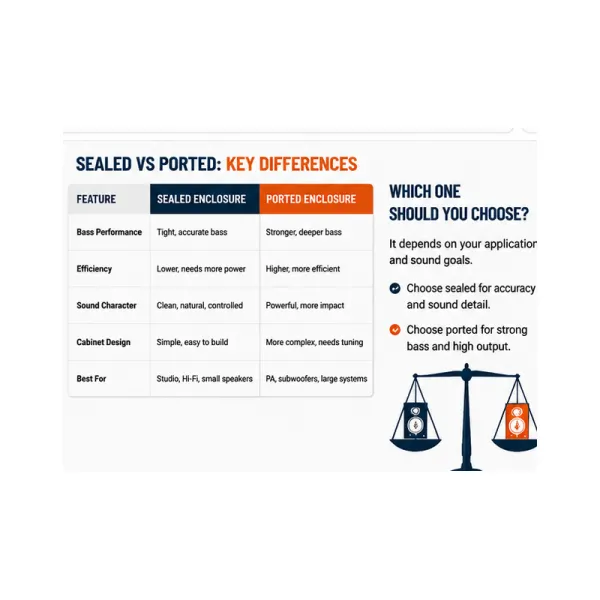
A simple comparison:
Sealed enclosure
· More accurate bass
· Better control
· Smooth sound
Ported enclosure
· More powerful bass
· Higher output
· Better efficiency
Neither design is always better. It depends on the final application.
For professional audio, sound accuracy is very important.
A sealed cabinet can provide very stable sound because the air inside the cabinet controls the speaker movement.
This is why some monitoring speakers and high-end audio products choose sealed designs.
Ported speakers can also have excellent sound quality. With correct cabinet tuning, they can deliver powerful and balanced audio performance.
The final sound depends on many factors:
· Speaker driver quality
· Cabinet material
· Internal structure
· Crossover design
· Acoustic tuning
The enclosure is only one part of the complete speaker system.
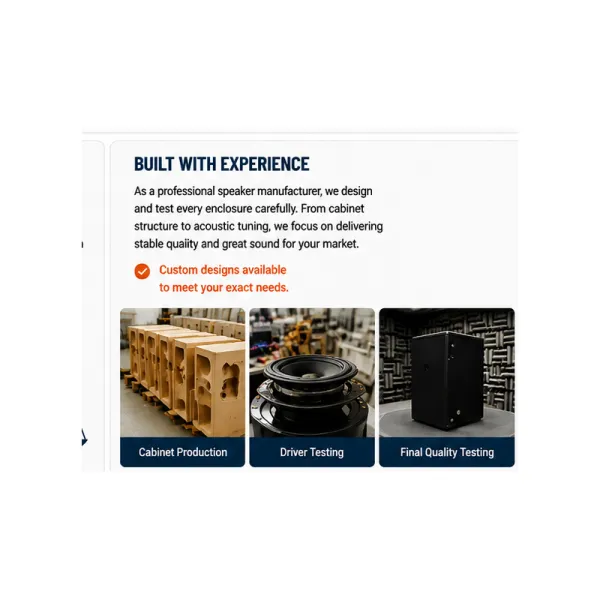
For a speaker factory, cabinet design is not only about choosing sealed or ported.
Before making samples, engineers usually check:
· Driver specifications
· Cabinet size
· Required frequency range
· Product application
· Customer market needs
For sealed cabinets, controlling cabinet vibration is very important.
For ported cabinets, engineers also need to test the airflow and port tuning.
During sample development, manufacturers normally adjust the cabinet structure several times to achieve the target sound.
This is why professional speaker production requires both engineering knowledge and manufacturing experience.
Different products usually use different enclosure solutions.
Studio Speakers
Many studio products focus on accuracy and detail.
A sealed enclosure can be a good option because it provides controlled sound.
Home Theater Speakers
Home theater systems often need strong bass effects.
A ported subwoofer can provide deeper and stronger low-frequency output.
Professional PA Speakers
Stage and event speakers need high volume and strong output.
Ported designs are commonly used because they provide better efficiency.
Compact Speakers
Small speakers often have limited cabinet space.
Engineers choose the enclosure type based on size, sound target, and cost requirements.

As a custom speaker manufacturer, we know that every project has different requirements.
A customer may need:
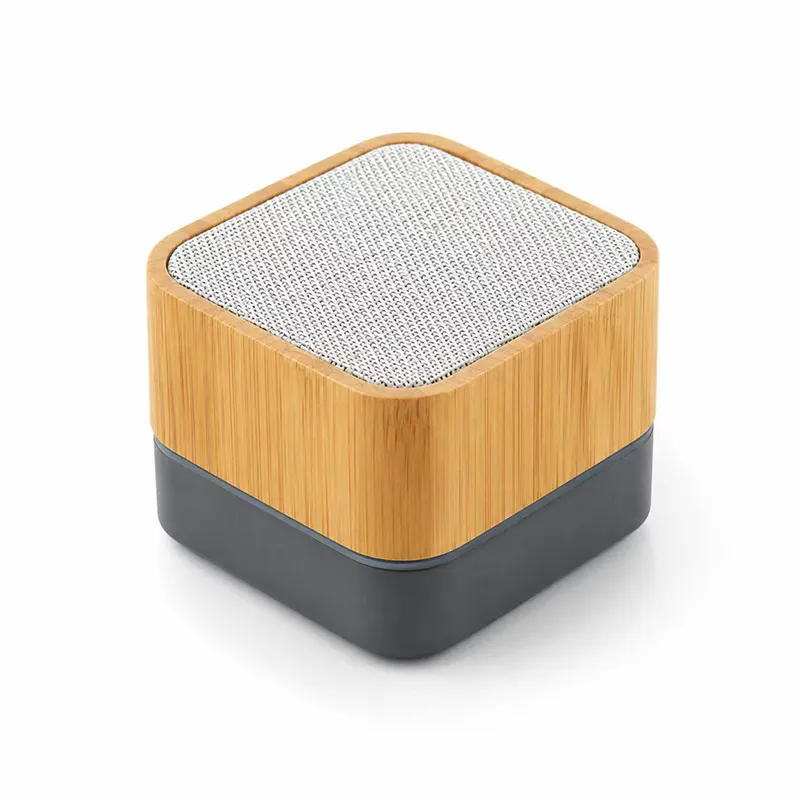
· A small Bluetooth speaker
· A professional stage speaker
· A home audio system
· A commercial speaker solution
The enclosure design needs to match the product purpose.
Our engineering process usually includes:
1. Understanding the customer application
2. Selecting the suitable speaker driver
3. Designing the cabinet structure
4. Testing sound performance
5. Adjusting the final design
A good speaker cabinet can improve sound quality and also increase product value.

Sealed and ported speaker enclosures both have their own advantages.
A sealed speaker enclosure is a good choice when sound accuracy and control are important.
A ported speaker enclosure is a good choice when stronger bass and higher output are needed.
There is no universal answer about which design is better.
The right choice depends on the speaker type, usage environment, and customer requirements.
For brands looking for custom speaker solutions, working with an experienced speaker manufacturer can help create better products with stable performance and competitive advantages.