







Dongguan Zantanze Technology Co., Ltd.

What Is Speaker Cabinet Resonance & Why It Matters

Table of Content [Hide]

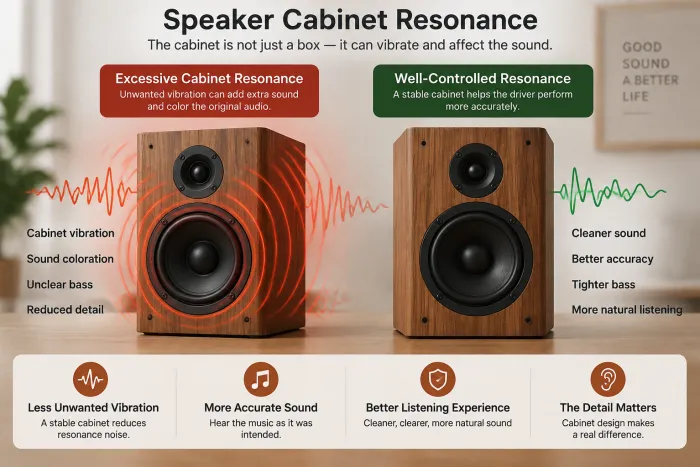
    Speaker Cabinet Resonance Explained: Excessive vs Controlled Resonance


    Introduction

    When people evaluate speakers, they usually focus on obvious features such as speaker drivers, power output, frequency response and appearance. However, they easily ignore one critical factor — the speaker cabinet.


    A speaker cabinet is not just a simple box. It is a precisely designed acoustic structure. The material, board thickness, internal space and splicing structure all greatly affect the speaker’s sound quality.


    Among all acoustic design concepts, cabinet resonance is the most essential one. Many people wonder: What exactly is cabinet resonance? Why do speaker brands spend a lot of effort controlling cabinet vibration?


    In fact, cabinet resonance directly determines sound purity, sound restoration accuracy and the overall listening experience.


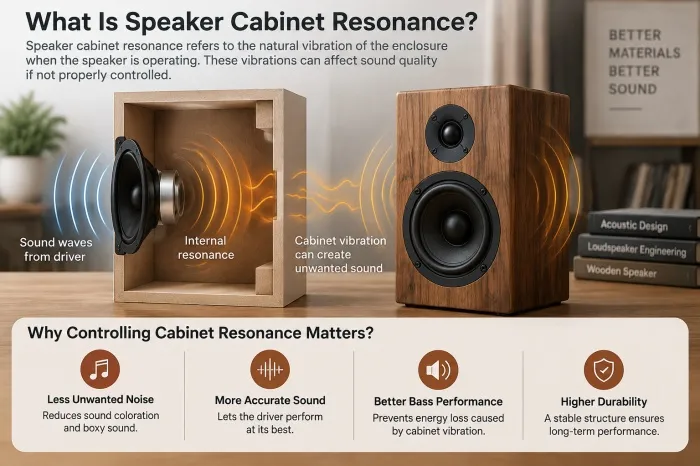
    What Is Speaker Cabinet Resonance?

    How Speaker Cabinet Resonance Affects Sound Performance


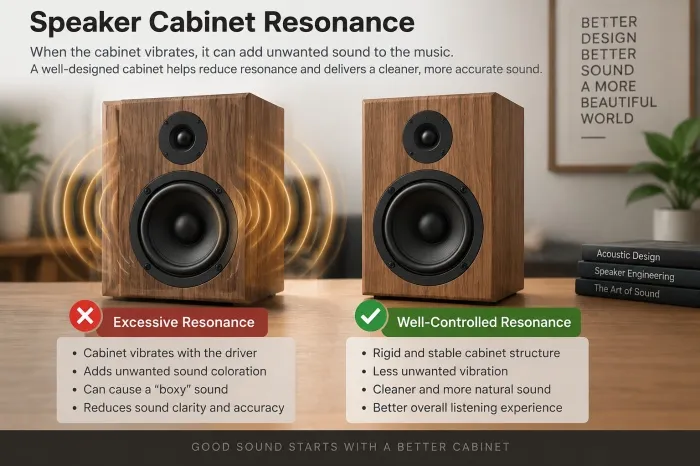
    Simply put, cabinet resonance is the natural vibration of a speaker cabinet when the speaker is working.


    Speaker drivers produce sound by pushing air back and forth. This movement also generates mechanical vibration that spreads to the entire cabinet. If the cabinet board is not rigid enough, it will vibrate at specific frequencies. This kind of extra vibration is cabinet resonance.


    Every material (MDF, plywood, plastic, metal) has its own natural vibration characteristics.


    It is impossible to completely eliminate all vibration. Professional speaker design does not pursue zero vibration. Instead, it focuses on controlling unnecessary resonance to avoid distorting the original sound.


    Why Cabinet Resonance Is So Important

    Speaker Cabinet Design and Vibration Control


    The core function of a speaker cabinet is to fix the driver and create a stable acoustic environment. Uncontrolled resonance will cause many sound problems.


    1. Avoid Sound Coloration

    Excessive cabinet resonance will add extra sound features to the music. This is called sound coloration.


    If the cabinet vibrates violently, users will hear:

    • Blurry and muddy bass

    • Unnatural tone

    • Lost sound details

    • Obvious “boxy” sound


    The final sound you hear is no longer the original recording, but a mix of authentic sound and cabinet vibration noise. A well-designed cabinet minimizes this interference.


    2. Keep Sound Accurate

    High-quality speakers should restore sound purely. Only the speaker driver should produce sound, not the cabinet.


    Too much cabinet vibration will interfere with driver performance and reduce sound accuracy. This is extremely important for studio monitors, high-end home speakers and wooden bookshelf speakers, which require highly delicate sound performance.


    3. Improve Bass Performance

    Low-frequency bass produces strong physical vibration. If the cabinet is soft and not rigid enough, it will shake with the bass driver.


    This wastes energy. Part of the power is used to shake the cabinet instead of producing bass sound. A rigid cabinet with good damping makes bass output cleaner, tighter and more powerful.


    How Manufacturers Control Cabinet Resonance

    Poor vs Good Speaker Cabinet Resonance Control


    There is no single way to eliminate resonance. Brands control vibration through reasonable material selection and structural optimization.


    1. Choose the Right Cabinet Material

    Material is the foundation of resonance control. Different materials have totally different vibration resistance.


    MDF Cabinet

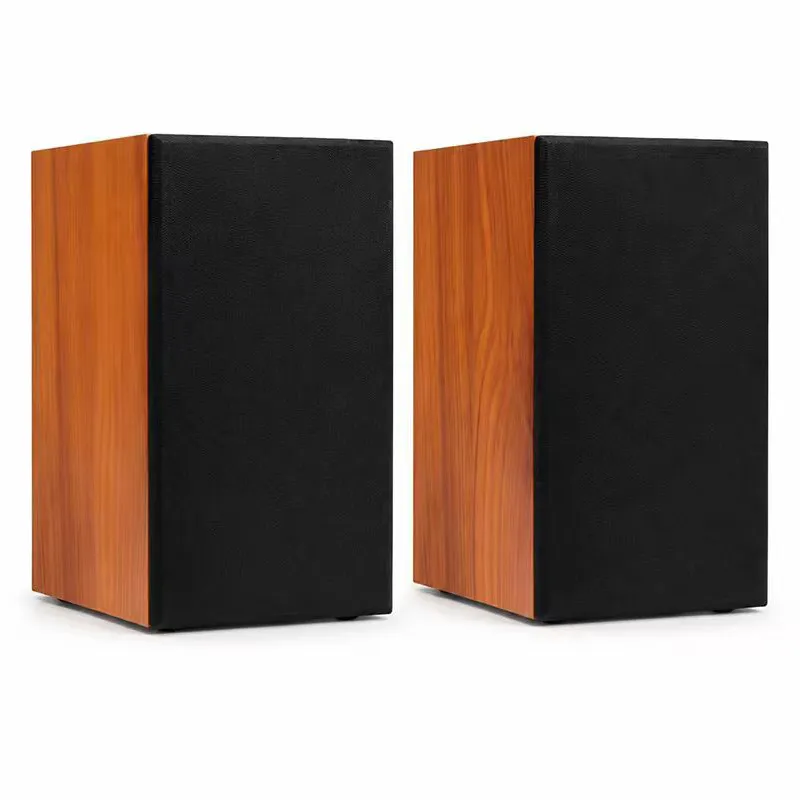
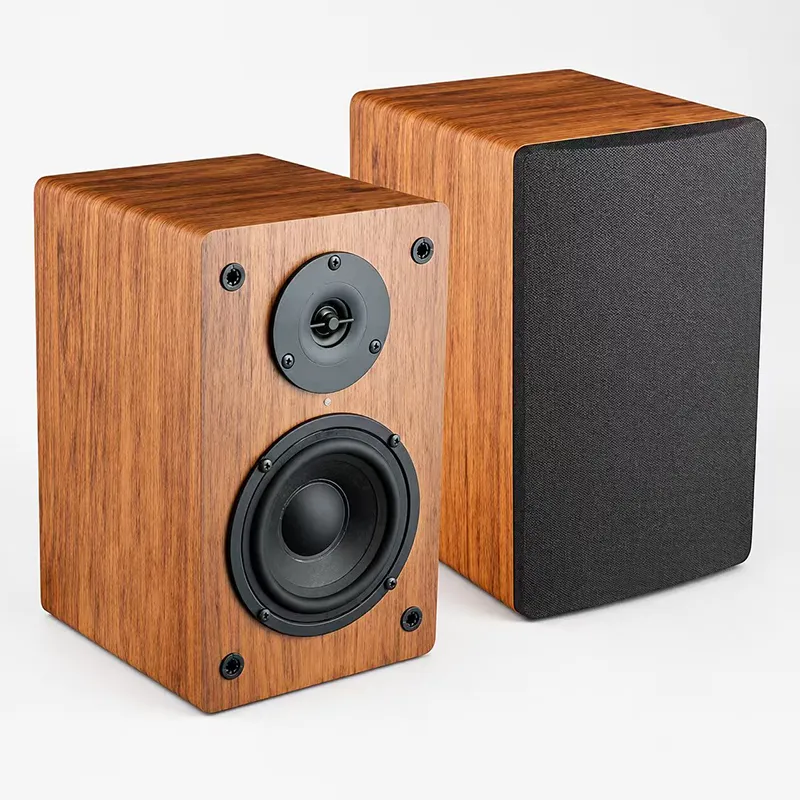
    MDF is the most common material for speaker cabinets. It features uniform density, good damping effect, smooth surface and easy processing. MDF can well absorb extra vibration, so it is widely used in home speakers, bookshelf speakers and decorative wooden speakers. It balances great acoustic performance and affordable cost.


    Plywood Cabinet

    Plywood is made of multi-layer cross-stacked wood veneers. It owns high rigidity, strong mechanical strength, good impact resistance and light weight.


    Thanks to its excellent stability, plywood is often used for professional audio equipment and high-end custom speakers.


    2. Increase Cabinet Rigidity

    Insufficient rigidity is the main cause of severe resonance. Manufacturers usually strengthen the cabinet in two ways:

    • Adopt thicker wood boards

    • Add internal reinforcing structures


    A rigid cabinet effectively suppresses vibration, reduces resonance and ensures pure and stable sound output.

    xianspeaker
    xianspeaker

    xianspeaker: high-end wood & bamboo speakers. 5,000㎡ workshop, strict QC, innovative design. Trusted globally.

    References
    PRODUCTS CATEGORIES
    We use cookies to offer you a better browsing experience, analyze site traffic and personalize content. Part of the tracking is necessary to ensure SEO effectiveness,
    By using this site, you agree to our use of cookies. Visit our cookie policy to learn more.

    Reject Accept